
Trusted Spray Foam Insulation Nationwide
Spray foam insulation stops air leaks that fiberglass and cellulose simply can’t touch. It’s the difference between a house that holds its temperature and one that fights your HVAC system every month. Laurel Attic Insulation has installed spray foam since 2003, and our crews handle everything from 50-square-foot rim joist jobs to whole-attic applications in a single day. We’re an independently owned member of the Relay Home Co. family, which means you get something most insulation contractors don’t offer: a written price before work starts, live technician tracking, and before-and-after photos of every job. When you call (361) 315-4177, a real person answers, 24/7. No voicemail, no callback queue.
Closed Cell Spray Foam Insulation
Closed Cell Spray Foam Insulation is the densest, hardest-working insulation we install. It cures into a rigid foam with an R-value of roughly R-6.5 to R-7 per inch, which means it delivers serious thermal resistance in a thin layer. More important, it acts as a moisture and air barrier all in one, so outside air, humidity, and vapor stall at the foam instead of moving through your building envelope. Homeowners choose closed cell when they need maximum R-value per inch, structural rigidity, or protection against moisture intrusion in basements, crawl spaces, and exterior walls. Most closed cell spray foam jobs run $2,000 – $8,500 depending on square footage, depth, and prep work, so it’s worth learning how much Spray Foam Insulation costs for your specific project. Laurel Attic Insulation installs closed cell foam from Demilec and Icynene, both of which carry decades of field performance data. Because of the chemical reaction involved, we’ll ask you to vacate the home for roughly 24 hours while the foam cures. We schedule around that, not the other way around.
The R-Value Math
R-value measures how well insulation slows heat from moving through a surface. Closed cell foam hits R-6.5 to R-7 per inch, so just 3 inches gives you roughly R-20. That’s why it’s the go-to for wall cavities and spaces where every inch counts.
Moisture Protection Built In
Closed cell foam is a Class II vapor retarder, meaning it blocks the movement of water vapor through the wall. In flood-prone regions or high-humidity climates, that matters more than the R-value. It also adds shear strength to wall assemblies, which sounds technical but means your walls literally get stiffer.
Open Cell Spray Foam
Open Cell Spray Foam is the lighter, more flexible cousin of closed cell. It expands dramatically after spraying, filling every gap, crack, and odd-shaped cavity, then cures soft and spongy. Open cell delivers about R-3.5 to R-3.8 per inch, so it’s typically applied in thicker coats, often 8 to 12 inches in attics. We recommend it for interior applications: attic rooflines, interior walls, sound damping between floors, and anywhere you want serious air sealing at a more approachable price. Most open cell spray foam projects run $1,500 – $6,500, with attics on the higher end because of the depth required. Laurel Attic Insulation uses Icynene and Johns Manville open cell products, both known for consistent expansion and low off-gassing. The material fills so completely that we typically see air leakage drop by 50% or more in older homes after a full attic application. It’s not a vapor barrier, so it needs a separate vapor management strategy in some climates. We’ll tell you honestly whether open cell is the right call for your structure.
Sound Control
The spongy structure of open cell foam absorbs sound waves instead of reflecting them. Homeowners use it in interior walls to quiet home theaters, laundry rooms, and bedrooms that share a wall with noisy mechanicals. It’s one of the most effective interior soundproofing materials you can specify.
Air Sealing Performance
Open cell foam’s expansion means it seals every seam and crack in a cavity. That air-sealing benefit is often worth more than the raw R-value alone, because air leaks account for up to 40% of a home’s heating and cooling load. We’ve measured the difference with blower door tests before and after installation.
Spray Foam Insulation Contractors
Spray Foam Insulation Contractors are licensed professionals who apply two-component foam that expands on contact to seal a building’s envelope. Unlike batt insulation that gets cut and stuffed, spray foam is a chemical system: two liquids combine at the spray gun, react, and expand in seconds. That means the contractor you choose matters more than the product you pick. Laurel Attic Insulation has run crews since 2003, and every technician is background-checked, uniformed, and trained on equipment calibration, proper substrate prep, and safe chemical handling. Most spray foam projects run $1,500 – $8,500, which includes prep, application, and cleanup. The single biggest pricing variable is depth: 3 inches of closed cell versus 10 inches of open cell are very different jobs. We provide a written price before any work starts, so there’s no guesswork, no door-step upcharges, and no “while we’re here” surprises. Chase Whitaker leads our spray foam division and personally reviews every project scope before we commit to a date.
Why Contractor Selection Matters
Spray foam is unforgiving of poor application. Off-ratio foam won’t cure correctly, over-spray gets everywhere, and under-applied foam creates thermal voids. A trained contractor calibrates the equipment on-site and checks ambient temperature and substrate moisture before spraying.
What We Put in Writing
Every job includes a written scope, a written price, and a written 365-Day Done Right Promise. If the foam doesn’t perform as specified, we make it right at no charge. You also get a free second visit if any repair fails within the year.
Spray Foam Attic Insulation
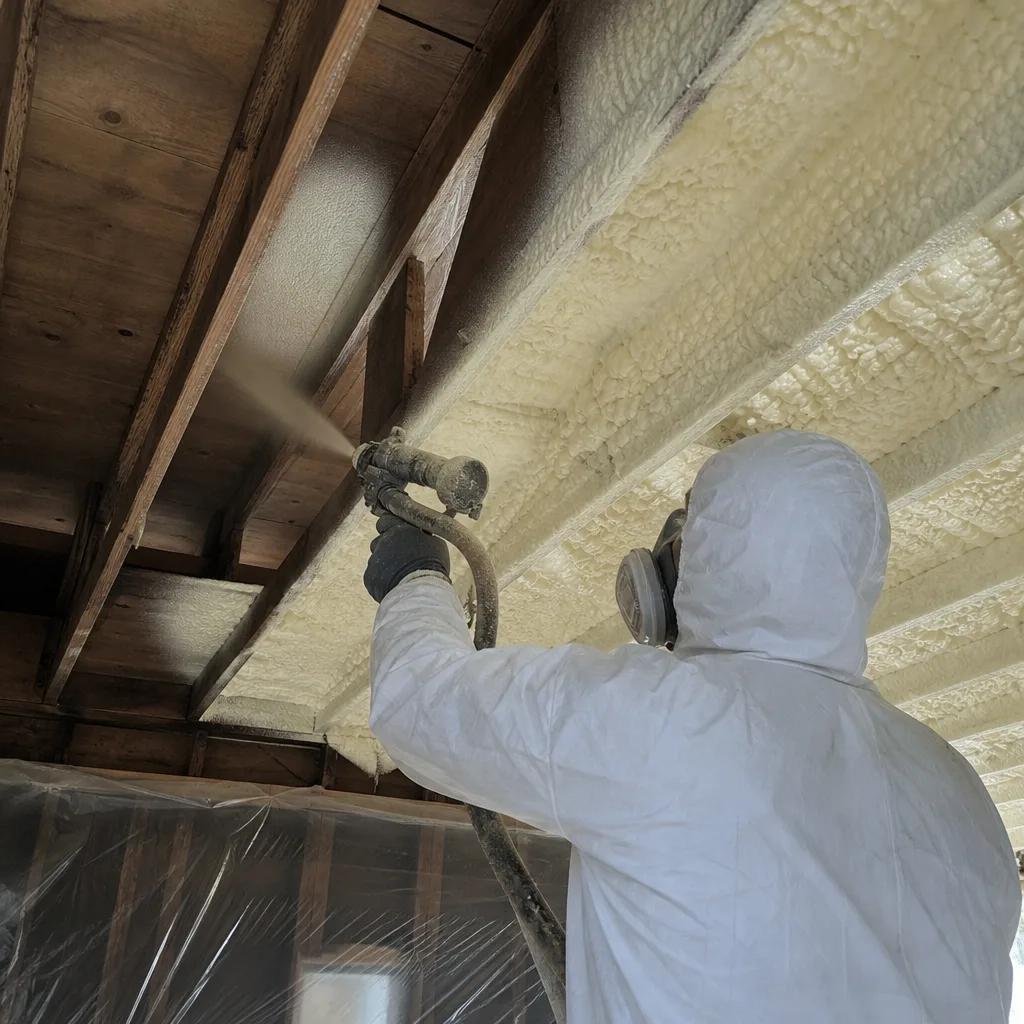
Spray Foam Attic Insulation seals the top of your house, and the top of your house is where the largest heat exchange happens. In summer, attic temperatures can hit 140°F, and that heat pushes down into your living space. In winter, warm air rises and escapes through every crack around recessed lights, wiring penetrations, and the attic hatch. Spray foam stops both. Laurel Attic Insulation applies our Spray Foam Insulation in Los Angeles directly to the roofline deck, turning the attic into a conditioned, semi-conditioned space. This is called a “hot roof” assembly, and it’s what we recommend for homes with HVAC equipment or ductwork in the attic. A full spray foam attic typically runs $2,500 – $7,800 in a standard single-family home. When we insulate the roofline, your attic temperature stays within ten degrees of the living space, which means your air handler and ductwork stop fighting 130°F heat. We use open cell foam for most attic applications and closed cell where the roof deck shows signs of moisture or the homeowner wants the structural benefit.
Conditioned Attic Benefits
Moving the thermal boundary to the roofline means any ductwork, air handlers, or stored items sit inside the conditioned envelope. That’s worth real money on your energy bill, because uninsulated ducts in a hot attic leak conditioned air into a space you never use.
When to Skip the Baffles
Traditional attic insulation requires baffles to keep ventilation channels open. With spray foam on the roofline, you eliminate that ventilation system entirely, because the roof deck is now sealed. One less thing to fail, one less path for air to leak.
Spray Foam Wall Insulation
Spray Foam Wall Insulation is applied to the inside of exterior walls, filling the full cavity between studs. It’s the highest-performing wall insulation you can install without increasing wall thickness, because it air-seals and insulates in one product. Homeowners choose it during gut renovations, new construction, or when walls are open for electrical or plumbing work. Most whole-house spray foam wall insulation jobs run $3,500 – $9,000 depending on stud depth and total wall area. Laurel Attic Insulation sprays foam into wall cavities once rough-in work is complete, and we coordinate with your builder or GC so the schedule doesn’t stall. Closed cell foam is the typical choice for walls because it adds structural rigidity and vapor control in a thin profile. We’ve also pumped foam into existing closed walls through small injection holes, preserving the drywall while filling the cavity. That’s a specialty technique, and Chase Whitaker evaluates the wall construction before promising any result.
New Construction Integration
When framing is open, spray foam is the fastest path to a high-performance wall. We spray after electrical and plumbing rough-in, and before drywall hangs. The foam fills every stud bay completely, including around electrical boxes and plumbing penetrations that fiberglass always misses.
Existing Wall Injection
For homes with uninsulated walls, we can inject foam through small holes in the drywall or exterior sheathing. The foam expands inside the cavity and fills it end to end. We patch the holes and repaint, and you’d never know we were there.
Rim Joist Spray Foam
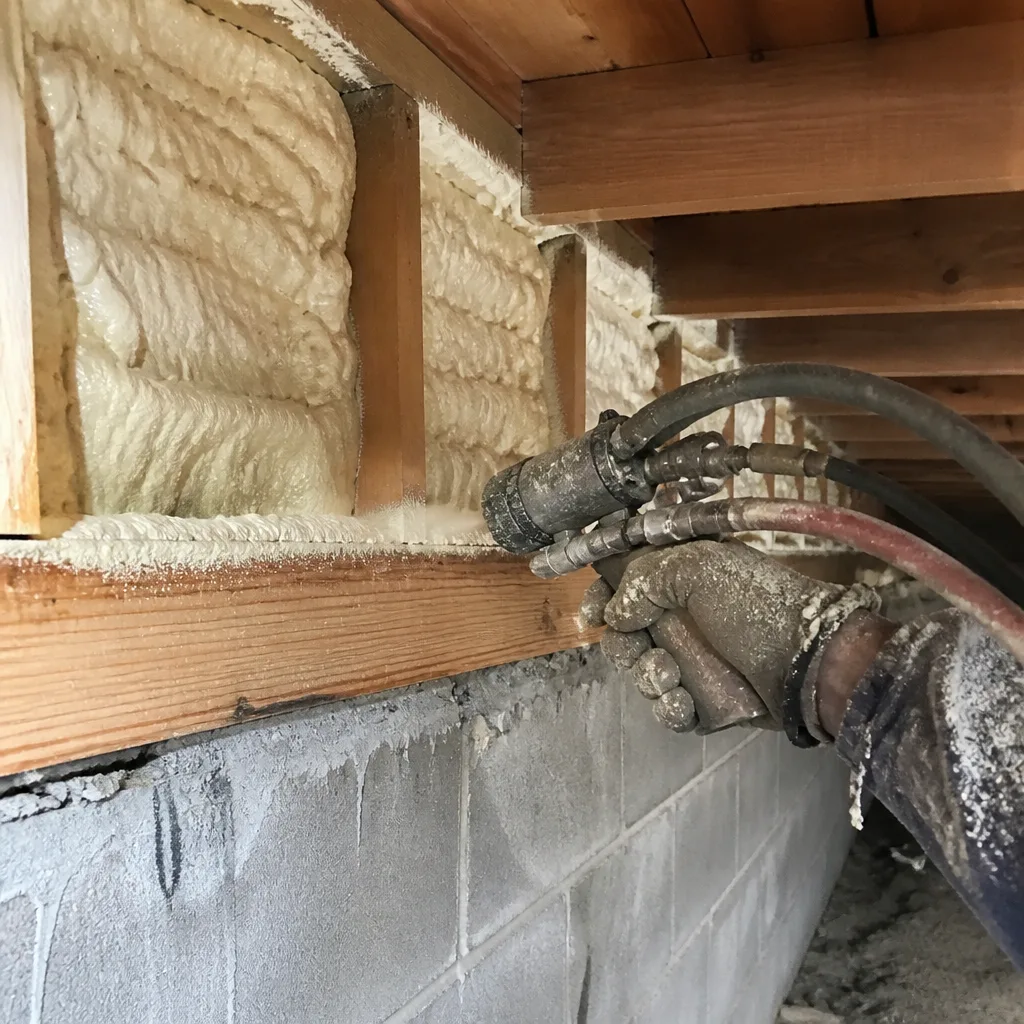
Rim Joist Spray Foam seals the band of wood that runs around the perimeter of your house, where the foundation meets the first floor. This is one of the most overlooked air leakage points in any home, and also one of the cheapest to fix. The rim joist area is a collection of cavities where the floor joists meet the band board, and in most homes, those cavities are completely uninsulated. Closed cell spray foam is the ideal product here: it seals the joint, blocks air, and stops moisture from condensing on the rim board in cold weather. Most rim joist spray foam jobs run $800 – $2,200 for an entire home, and the work usually takes less than a day. Laurel Attic Insulation does more rim joist sealing than any other spray foam application, because it’s the highest-ROI insulation job a homeowner can order. We use Demilec closed cell foam for rim joists, applying 2 to 3 inches in each cavity. The air-sealing benefit alone typically pays for the job within one or two heating seasons.
The Highest-ROI Insulation Job
A rim joist air seal costs under $2,500 in most homes and reduces air infiltration dramatically. We’re talking about a perimeter of unconditioned air entering your basement or crawl space at multiple points. Sealing all of them at once is the single most cost-effective spray foam project we offer.

What We See in the Field
In most homes built before 2000, the rim joist cavities are empty. Sometimes there’s a fiberglass batt shoved in there, but fiberglass doesn’t stop air movement, so it does almost nothing at the rim. We pull it, prep the cavity, and spray closed cell foam tight to the band board.
Crawl Space Spray Foam Insulation
Crawl Space Spray Foam Insulation seals the underbelly of your home against moisture, cold floors, and musty air. Most crawl spaces are vented, which means outside air and humidity move through them freely. That’s a problem because the air in your crawl space becomes the air you breathe in your living room through a process called the stack effect. We recommend sealing and insulating crawl space walls with closed cell spray foam, then conditioning the space with a dehumidifier if the climate demands it. Most crawl space encapsulation and spray foam jobs run $3,000 – $7,500 for a typical home. Laurel Attic Insulation applies 2 inches of closed cell foam to the crawl space walls, seals the rim joists, and installs a vapor barrier on the floor. This creates a clean, dry, conditioned crawl space that keeps your floors warmer in winter and your indoor humidity lower year-round. We’ve also insulated the subfloor with open cell foam in homes where the crawl space must stay vented. The right approach depends on your foundation, your climate, and your budget, and we’ll tell you straight which one fits.
Encapsulation vs. Subfloor Insulation
Encapsulation means sealing the crawl space walls and turning it into a conditioned space. Subfloor insulation means leaving the crawl space vented and insulating the floor above it. Encapsulation is the better long-term play in most homes, but subfloor work is cheaper and still solves cold floors.
Humidity and What It Does
Open vented crawl spaces in humid climates run 70% to 90% relative humidity all summer. That moisture wicks into floor joists, grows mold, and rusts out your HVAC ductwork. Sealing the crawl space with closed cell foam stops that moisture at the wall, before it ever gets inside.
Garage Spray Foam Insulation
Garage Spray Foam Insulation turns a hot, drafty garage into a usable year-round space. Most garages share at least one wall with the house, and that wall is often uninsulated, which means your garage temperature leaks into your living space through the shared wall. We spray closed cell foam on the shared wall and the garage ceiling if there’s living space above, and open cell foam on the exterior garage walls. Most garage spray foam jobs run $1,200 – $3,800 depending on ceiling height, wall area, and whether the garage door needs an insulated replacement. Laurel Attic Insulation insulates garages for homeowners who use the space as a workshop, home gym, band room, or just want to stop heating the outdoors. We use Rockwool in some garage wall cavities where fire resistance matters, since garages have specific fire separation requirements in most building codes. Our foam work in garages includes sealing the gap around the garage door frame, which is a common air leak most contractors skip. That detail alone changes the room’s comfort level.
The Shared Wall Problem
The wall between your garage and your living space is called the “fire wall,” and it’s subject to different insulation requirements than other exterior walls. We know the code specifics, and we’ll spec the right product for that wall so you stay complaint and comfortable.
Garage Ceiling as a Floor Above
If there’s a bedroom above the garage, that ceiling is a big heat loss surface. We spray closed cell foam on the garage ceiling underside, which seals the garage air out and keeps the floor above warmer. It’s the difference between a freezing bedroom and a comfortable one in January.
Brands We Service
We install Icynene spray foam because it expands consistently and cures with minimal off-gassing, which matters when you’re sealing a house you live in. Icynene’s open cell and closed cell lines both carry 20+ year field histories, and we’ve been spraying their products for over a decade. Demilec is our go-to for closed cell applications, particularly rim joists and crawl space walls, because the foam cures hard, bonds aggressively, and holds up in high-moisture environments.
We also work with Rockwool products for fire-rated wall assemblies and commercial applications. Rockwool is stone wool, not spray foam, but it complements foam work in garages, mechanical rooms, and multifamily buildings where code requires non-combustible insulation. Whether you need Icynene, Demilec, Rockwool, or any other make, we can help.
Signs You Need a Pro Right Now
- Ice dams forming on your roof in winter. Ice dams are a symptom of heat escaping through the attic and melting snow unevenly. Spray foam on the roofline stops the heat loss that creates them.
- Rooms that never match the thermostat. If one bedroom is 10 degrees off from the rest of the house, you likely have an air-sealing problem in the walls or attic. Foam fixes the leaks fiberglass can’t reach.
- Your energy bill spiked, and you don’t know why. A 20% jump in usage without a change in behavior usually means your insulation isn’t doing its job anymore. Spray foam seals the leaks that develop as homes settle.
- Pests in the attic or crawl space. Rodents and insects enter through the same gaps air uses. Sealing with spray foam closes those entry points and keeps them out for good.
- Cold floors over the crawl space or garage. If your feet hit freezing floors every winter morning, the under-floor insulation has failed or was never installed correctly. Foam solves it permanently.
Our Process, Step by Step
- 1
You call or book online. A real person at Laurel Attic Insulation answers 24/7. We ask about your home’s square footage, the space you want insulated, and any comfort problems you’re experiencing. You get a written estimate range before we ever schedule a visit.
- 2
We inspect and measure. A technician arrives at a live, trackable time and walks the space with you. We measure the area, check for existing insulation, moisture, and air leaks, and take photos. You get a written, line-item price for the exact scope.
- 3
We prep the space. We cover floors, mask off areas that shouldn’t get foam, and set up ventilation. For spray foam, we verify ambient temperature and substrate moisture to ensure proper curing. Everything is explained before the first spray.
- 4
We install the foam. Our crew sprays to the specified depth, checking thickness as we go. For closed cell, we spray in passes to control expansion. For open cell, we over-spray and shave back to spec. You can watch or track progress through photo updates.
- 5
We walk the job with you. When the foam cures, we show you the finished work, confirm depth with a probe, and share before-and-after photos. You get a written guarantee and a digital invoice you can pay from your phone. If anything isn’t right within 365 days, we come back and fix it free.
How Much Does Spray Foam Insulation Cost?
Spray foam insulation costs more than fiberglass, and it pays back faster. A typical rim joist sealing job runs $800 – $2,200. A full attic open cell application runs $2,500 – $7,800 in a standard single-family home. A whole crawl space encapsulation with closed cell foam runs $3,000 – $7,500. Closed cell wall insulation in an average home runs $3,500 – $9,000. The variables that move the price: square footage, foam depth, product type (open cell is roughly half the material cost of closed cell), accessibility, and prep work like old insulation removal. You’ll also pay more in homes with complex rooflines, tight attics, or existing moisture damage. The best way to avoid overpaying is to get a written, line-item price before work starts, and that’s exactly what Laurel Attic Insulation provides. Our estimates are free and include material, labor, prep, and cleanup, in writing, with no door-step changes. Call (361) 315-4177 and you’ll have a real number in your hand before we ever spray one ounce of foam.
Where We Work
Laurel Attic Insulation serves homeowners and businesses across the United States through local crews trained to the same standard. We coordinate dispatch nationally, but every technician is local to the region they serve. Whether you’re sealing a single rim joist or insulating a new build, we’ll match you with a crew that knows your climate, your codes, and your construction type. You get one brand, one standard, one written guarantee.
Frequently Asked Questions About Spray Foam Insulation
Spray foam insulation is a two-component chemical system that combines at the spray gun and expands on contact to seal and insulate a space. It’s the only insulation that both stops air movement and provides a high R-value per inch, as covered in The Complete Spray Foam Insulation Guide for Los Angeles Homeowners. Unlike fiberglass or cellulose, it fills every crack and gap in a cavity rather than just covering it.
Most spray foam jobs are finished in a single day, including rim joists, crawl spaces, and standard attics. Closed cell foam requires roughly 24 hours of cure time before you re-enter the space. We schedule the work, the cure time, and the walkthrough all in one conversation.
Spray foam insulation runs $1,500 – $8,500 for most residential jobs, with specific applications like rim joists at $800 – $2,200 and full attics at $2,500 – $7,800. The price depends on square footage, foam depth, and product type. Call (361) 315-4177 for a free, written estimate.
Yes, we install Icynene and Demilec spray foam, along with Johns Manville, Rockwool, and other leading brands. We match the product to the job and the climate, not to whatever is on the truck. We’ll also service homes with existing foam from any manufacturer.
Yes, we answer calls 24/7 and can dispatch a technician for urgent problems like a failed rim joist seal or water intrusion in the crawl space. When you call (361) 315-4177, you speak to a live person immediately. We’ll tell you honestly whether the job is urgent or can wait a few days.
Every Laurel Attic Insulation job includes the 365-Day Done Right Promise in writing. If the foam doesn’t perform as specified within a year, we make it right at no charge. You also get a free second visit if any repair fails during the warranty period.
Clear the area around the work zone, move any stored items out of the attic or crawl space, and plan to be away from the home for 24 hours if we’re spraying closed cell foam. We’ll send you a preparation checklist before your install date and walk through it on the phone.
Schedule Your Spray Foam Insulation Service Today
Stop living with drafts, cold floors, and a utility bill that climbs every month. Call (361) 315-4177 now for a free, no-obligation estimate on spray foam insulation. You’ll get a written price before any work starts, a live arrival time, and a 365-day guarantee in writing. If it’s not done right, we make it right. That’s the deal, plain and simple.
Written by Chase Whitaker, Owner at Laurel Attic Insulation, serving homeowners nationwide since 2003.