
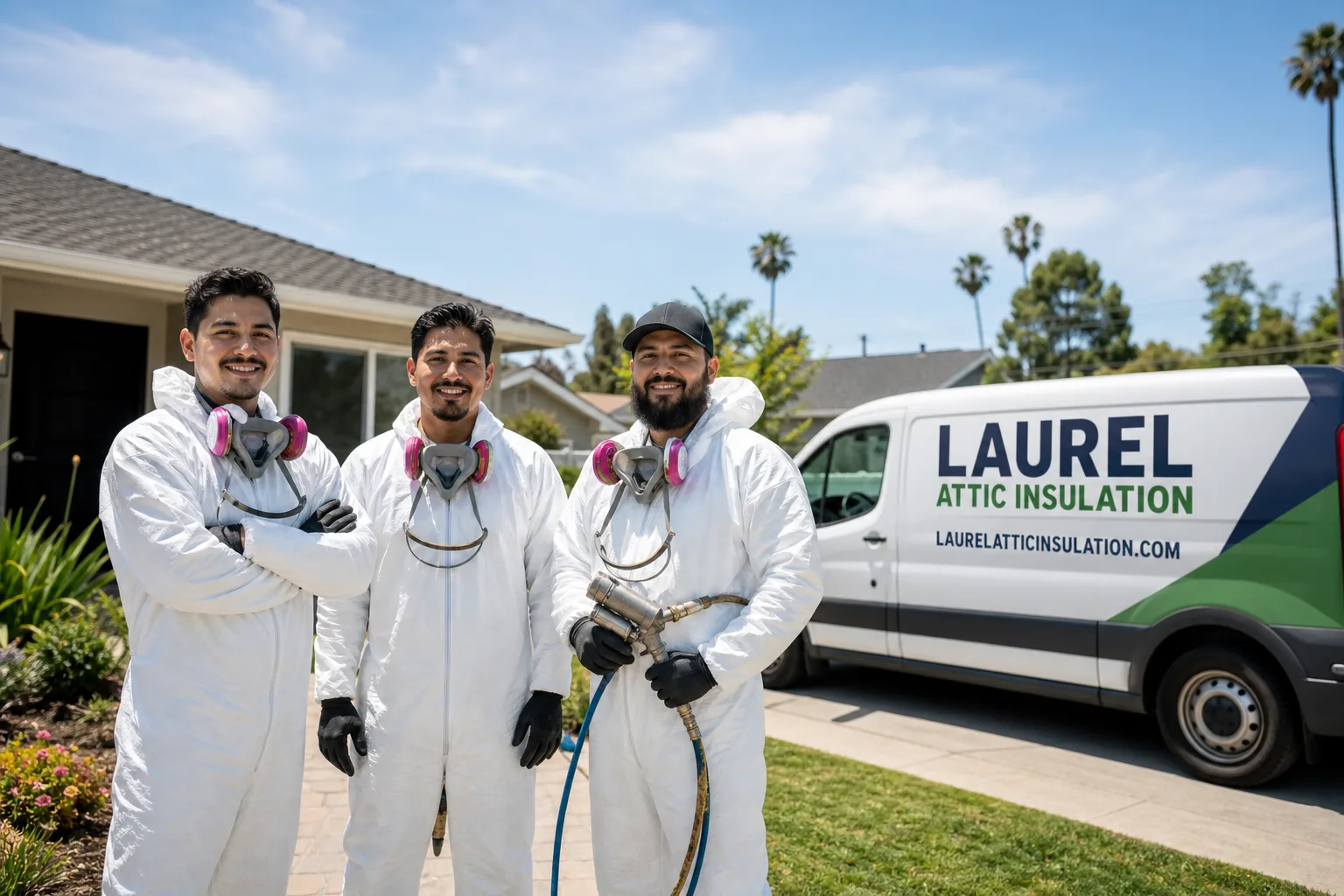
Fast, Reliable Insulation Removal Across Rolling Hills Estates
Insulation removal in Rolling Hills Estates usually runs $1,100 – $3,400 depending on attic size, material type, and how much rodent or moisture damage we’re dealing with. Most jobs on the Peninsula take one to two days, and we schedule around the marine layer so exposed bays don’t sit damp overnight. If you’ve got old fiberglass buried under newer batts, or you’re smelling something in the upstairs bedrooms that wasn’t there last year, call us at (361) 315-4177. We answer live, 24/7, and we’ll give you a written price before anything gets pulled.
Our crews know Rolling Hills Estates specifically. We’ve worked attics off Dapplegray Lane, Empty Saddle, and the hillside streets above Palos Verdes Drive North. The homes here aren’t like tract housing in the flats. They’re custom builds on slopes, with gable vents that face the ocean breeze and attics that trap moisture differently than a standard two-story in Torrance. That local knowledge changes how we stage removal, how we bag material, and how we time the job around fog and dew-point windows.
Why Laurel Attic Insulation Is Rolling Hills Estates’s Preferred Insulation Removal Company
We’re part of the Relay Home Co. family, founded in 2003, and we built our reputation on doing insulation work with a level of visibility most contractors in Rolling Hills Estates don’t offer. Every job includes the Relay Visibility Guarantee: a written price before work starts, live technician tracking, and before-and-after photos delivered to your phone. Chase Whitaker leads our team, and he holds every technician to the same standard: background-checked, uniformed, and on site at a live, trackable time, not a four-hour window.
Rolling Hills Estates homeowners call us because the booking experience feels like the rest of their life. You book in a tap. You see when we’re arriving. You get photo proof of every step, including the bags of contaminated material leaving your attic and the clean bays before new insulation goes in. No contractor mystery, no door-step price changes, no phone tag. Our 365-Day Done Right Promise is written into every job: if it’s not right, we make it right, for a full year.
Calls are answered by a live person, 24/7. That matters when you discover raccoon debris in your attic on a Saturday afternoon or when the smell from old batts finally pushes you to act on a Tuesday night. You won’t get a voicemail. You’ll get Chase or a member of his team, ready to schedule.
Insulation Replacement in Rolling Hills Estates
Insulation replacement in Rolling Hills Estates is a bigger job than simple removal, and it’s the right call when the existing material in your attic is degraded, rodent-contaminated, or so compressed from years of Peninsula moisture that it’s no longer doing its job. Many homeowners pair this with Spray Foam Insulation in Rolling Hills Estates for a more complete thermal seal. Most replacement projects on hillside homes here run $1,600 – $4,000, depending on the R-value you’re targeting and whether we’re pulling multiple layers of stacked material first. The process is straightforward: we remove everything down to the drywall, inspect the bays, air-seal the gaps, and install fresh material matched to your attic’s actual conditions.
Signs Your Rolling Hills Estates Attic Needs Full Replacement
You notice the upstairs bedrooms get hot by 2 p.m. even when the A/C runs. You smell something musty when the attic access is open. You looked up there and saw old yellow batts with gray, matted insulation laid over them. If any of those sound familiar, replacement is almost always cheaper in the long run than piling more material on top of a failing original layer.
What Replacement Costs on the Peninsula
Plan on $1.60 – $3.50 per square foot for full removal and replacement in Rolling Hills Estates. Attics over 1,500 square feet trend toward the higher end, especially when we’re working in cramped hillside pitch or hauling bags out through a second-story gable. We use materials from Owens Corning, Rockwool, Johns Manville, and CertainTeed, selected for the moisture profile of the Palos Verdes Peninsula, not whatever happens to be on the truck.
Attic Restoration in Rolling Hills Estates
Attic restoration in Rolling Hills Estates goes beyond swapping insulation. It means returning your attic to a clean, dry, functional state after years of neglect, wildlife intrusion, or moisture damage. We see this often on canyon-edge properties around Empty Saddle and the horse-trail buffers, where attics become nesting sites and the insulation turns into a sponge for everything the animals leave behind. Restoration typically runs $1,800 – $5,000 on the Peninsula, and includes full removal, sanitizing the affected bays, air-sealing, and new insulation.
Animal Damage and Odor Removal
Rodent and wildlife debris doesn’t just smell. It can carry pathogens into the air that circulates through your home. We bag and haul every bit of contaminated material, treat the exposed surfaces, and eliminate the odor source entirely rather than covering it with deodorizers. You’d be surprised how quickly the smell clears once the actual source is gone.
When Restoration Beats Replacement Alone
If your attic has standing moisture stains on the roof deck, mold starting on the framing, or rodent trails through the insulation, you need restoration, not just new batts. Skipping the sanitizing step just seals the problem under fresh material. Our crew worked an attic off Dapplegray Lane where a previous owner had layered Rockwool over failing batts instead of removing them. We pulled the rodent-contaminated mix, bagged and hauled it out through a second-story gable, then prepped the bays for Owens Corning batts and air-sealed the top plates. The homeowner said the attic smell disappeared within a day and the upstairs bedrooms held temperature noticeably better that same week.
Trusted Brands We Service in Rolling Hills Estates
We stock and install material from eight leading manufacturers, including Rockwool, Johns Manville, CertainTeed, and Knauf. For Rolling Hills Estates homes, we often recommend Rockwool for its moisture resistance in marine-layer conditions and Owens Corning for standard replacement work where cost and R-value matter most. Because we’re staging jobs on the Peninsula weekly, we keep common sizes ready and can usually source specialty material within one to two days. You won’t wait weeks for a brand match. You’ll get the right material, in writing, before we start.
For a deeper look at our full Insulation Removal process and what to expect on any job, our service hub covers every step. And for more on how we work across the Peninsula, see Insulation Removal in Rolling Hills Estates.
Common Insulation Removal Problems We See in Rolling Hills Estates Homes
- Stacked batts in hillside attics. Prior owners layered Rockwool or CertainTeed batts over degraded fiberglass instead of removing the original material. This traps moisture between layers and creates a musty smell that never quite goes away. We remove both layers down to the deck and start fresh.
- Rodent and wildlife debris near canyon edges. Streets like Empty Saddle and Dapplegray back up to open space and horse property, which means attics become wildlife corridors. Nesting material, droppings, and chewed insulation can’t be covered; it has to come out completely.
- Marine-layer moisture staining. The Peninsula’s morning fog seeps into attics through gable vents and soffit gaps. Removal that ignores dew-point timing leaves damp bays exposed overnight, which invites mold before new insulation even goes in. We stage our work around fog windows.
- Unsealed penetrations after removal. Once old insulation is out, gaps around can lights, top plates, and duct chases are exposed. If we don’t air-seal those same day, conditioned air escapes and your new insulation underperforms. Sealing is part of every removal job we quote.
Pricing for Insulation Removal in Rolling Hills Estates, CA
A typical insulation removal job in Rolling Hills Estates runs $1,100 – $2,800 for a standard attic under 1,200 square feet. Larger hillside homes with multiple attic sections or second-story gable access run $2,500 – $3,400. Full removal plus replacement lands between $1,600 and $4,000 depending on R-value and material. Attic restoration with sanitizing and air-sealing starts around $1,800 and can reach $5,000 for heavy contamination. Every quote is written, itemized, and delivered before work starts. There’s no deposit required to schedule an estimate. Call (361) 315-4177 and Chase’s team will walk you through exact numbers for your attic.
We Also Serve Cities Near Rolling Hills Estates
Our crews regularly work up and down the coast and across Southern California. Beyond Rolling Hills Estates, we serve homeowners in Los Angeles, San Diego, San Jose, and San Francisco. If you’re in a neighboring city and dealing with old insulation, rodent damage, or moisture issues, call us at (361) 315-4177. We’ll tell you honestly whether the job makes sense for our travel range and give you a written price either way.
Serving Rolling Hills Estates, CA - Our Local Coverage Area
We’re based in the Rolling Hills Estates area and know this community well. Use the map below to see our service coverage - if you’re nearby, we can almost certainly help.
FAQs About Insulation Removal in Rolling Hills Estates
We can typically get a crew to Rolling Hills Estates same day or next morning for emergency jobs like active rodent contamination or water-soaked insulation. Standard removal and replacement usually schedules within three to five days. Call (361) 315-4177 and we’ll give you a live arrival window, not a four-hour guess. Estimates are free, and we’ll put the price in writing before you commit.
Yes, almost always. In Rolling Hills Estates hillside homes we regularly find degraded fiberglass buried under Rockwool or CertainTeed batts, and both layers have to come out. Leaving the old material underneath traps moisture, holds odor, and reduces the performance of whatever sits on top. We remove everything down to the drywall, then air-seal and install fresh material. For an exact quote on your attic’s layered situation, call (361) 315-4177.
It absolutely does. The Peninsula’s morning fog keeps relative humidity high, which means exposed attic bays can stay damp if removal happens at the wrong time of day. We stage our Rolling Hills Estates jobs around dew-point windows, hauling material during drier afternoon hours and making sure bays are sealed before evening moisture settles. This is exactly the kind of local timing that a generic contractor won’t account for. If your attic has moisture concerns, call (361) 315-4177 and we’ll walk you through the sequencing.
We remove all existing insulation down to the drywall, bag and haul it out, inspect the bays for moisture and animal damage, air-seal gaps around can lights and top plates, then install new material matched to your home’s R-value needs. Most Rolling Hills Estates attics take one to two days, with larger hillside homes stretching to three. You’ll get before-and-after photos and a written guarantee on the work. Call (361) 315-4177 for a free estimate with actual dollar figures.
In most cases, yes. We contain the work area, bag contaminated material in sealed bags, and haul it out through the gable or access point without routing it through your living space. The upstairs may smell briefly during removal, but it clears fast once the source is out. For severe infestations on canyon-edge properties like those near Empty Saddle, we may recommend a one-night stay elsewhere, but that’s rare. Call (361) 315-4177 and we’ll give you an honest read on your specific attic.
If you’re ready to get the old insulation out of your Rolling Hills Estates attic, call Laurel Attic Insulation at (361) 315-4177. Chase Whitaker and his crew will answer live, give you a written price before work starts, and show up at a time you can track. Laurel stays green all year, and so should your home’s comfort. That’s the idea behind the name.
Written by Chase Whitaker, Owner at Laurel Attic Insulation, serving Rolling Hills Estates since 2003.