
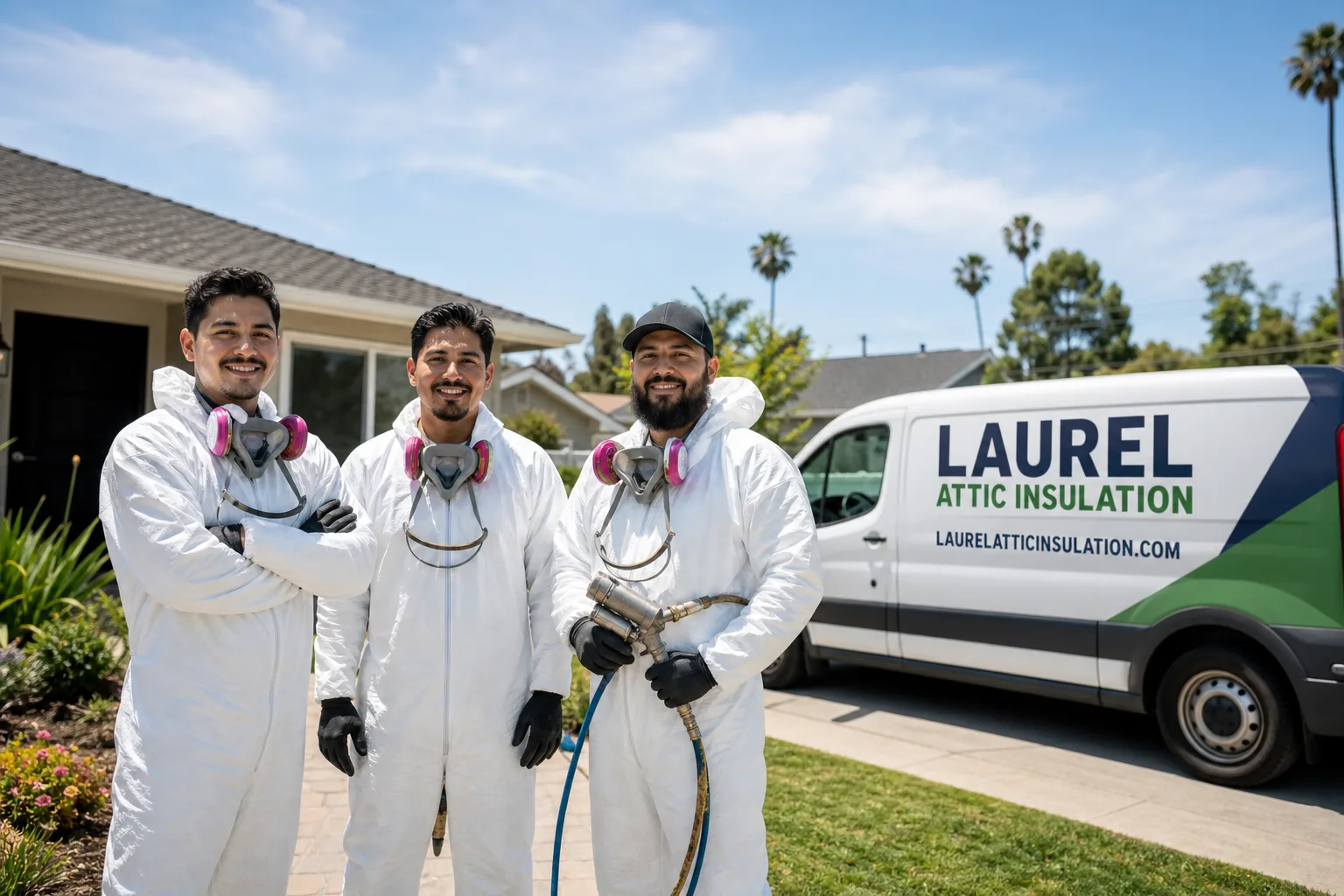
How Much Does Insulation Removal Cost in Half Moon Bay, CA?
Insulation removal in Half Moon Bay typically runs $1.50 – $3.50 per square foot, so a standard 1,200-square-foot attic lands between $1,800 and $4,200. Blown-in fiberglass and cellulose removal sit at the lower end, while wet, moldy, or vermiculite-containing material pushes costs higher. The coastal moisture problem in Half Moon Bay means many jobs also include moisture remediation or framing sanitization, which adds $400 – $900 depending on what we find underneath. Call (361) 315-4177 for a written quote before any work starts.
Key Takeaways:
- Typical Half Moon Bay attic removal runs $1,800 – $4,200 for 1,200 sq ft
- Marine-layer humidity means old insulation often comes out wet and moldy
- Salt air corrodes attic fasteners, which may need replacement during removal
- We offer same-day response to Half Moon Bay and El Granada
- Free written estimates, live tracking, and a 365-Day Done Right Promise
Fast, Reliable Insulation Removal Across Half Moon Bay
When your attic insulation has absorbed years of Half Moon Bay fog, it stops insulating and starts decaying. That’s where our Insulation Removal team comes in. We serve every corner of Half Moon Bay, from the flatlands near Highway 1 to the hillside homes off Higgins Canyon Road, and we typically arrive within one business day of your call.
Chase Whitaker leads our crews, and he’s the person who makes sure every removal job starts with a clear written price and ends with photographic proof the attic is clean. The marine layer doesn’t wait, and neither should you. Wet insulation breeds mold faster than most homeowners realize. Call (361) 315-4177 and a live person answers, 24/7.
Why Laurel Attic Insulation Is Half Moon Bay’s Preferred Insulation Removal Company
Half Moon Bay homes face a moisture problem most insulation companies inland never deal with. We do. Every week, our crews pull saturated fiberglass from attics in Alsace Lorraine, Frenchmans Creek, and the neighborhoods east of Main Street that have been wicking fog for decades. We understand how coastal air changes the job, and we price accordingly.
Our customers in Half Moon Bay rate us on the things that matter when your attic is open: showing up at the time we promised, keeping the job site clean, and sending before-and-after photos through the Relay Visibility Guarantee. Every job gets a written price before a single bag of insulation leaves your attic, and every removal includes the 365-Day Done Right Promise in writing. If something isn’t right, we come back and make it right, free.
Insulation Replacement in Half Moon Bay
Insulation Replacement in Half Moon Bay is rarely as simple as pulling out the old and blowing in the new. For many homes, we recommend Spray Foam Insulation in Half Moon Bay as a better-performing alternative. Because the marine layer keeps average humidity above 75% for much of the year, old fiberglass and cellulose often come out wet, compacted, and carrying mold spores. Removing the old material is step one. Fixing what the moisture did to your framing is step two. Then we install insulation that actually performs in a coastal environment.
Most Half Moon Bay homeowners spend $2,300 – $5,500 for full removal and replacement, depending on attic square footage, access, and whether we need to sanitize the sheathing. Homes built before 1980 in neighborhoods like Granada and near the Pillar Point bluffs tend to need the most framing treatment.
Wet Insulation Removal
When insulation has been soaking up fog for years, it clings to rafters and sheathing instead of vacuuming out cleanly. Our crews use commercial HEPA-filtered vacuums, but we also hand-scrape sections where cellulose has clumped and hardened. The goal is a clean deck before anything new goes in.
Framing Treatment and Moisture Correction
Once the old material is out, we inspect every exposed rafter and the roof deck for mold staining, rot, or sweating. We sanitize affected areas and mark any decking that needs ventilation correction. In Half Moon Bay, adding ridge or soffit vents during replacement is common. Trapped attic air is a bigger enemy here than almost anywhere in the Bay Area.
Attic Restoration in Half Moon Bay
Attic Restoration in Half Moon Bay goes beyond exchanging insulation. It means returning an attic that has spent years under the fog line to a dry, clean, properly vented state. Homeowners in the older pockets south of downtown, especially around Miramar and the 94019 ZIP, often discover their attic has been quietly deteriorating under insulation that looked fine from the hatch.
A full restoration, which includes removal, sanitizing, treatment of rusted fasteners, venting upgrades, and new insulation, typically runs $3,200 – $7,500 in Half Moon Bay. The range depends on attic height, debris load, and whether we need to address corroded hangers or clips that salt-laden fog has eaten through.
Sheathing Sanitization
We apply an antimicrobial treatment to roof decking and rafters after removal when mold is present. This isn’t a spray-and-run shortcut. The treatment gets applied only after the surface is vacuumed and scraped, and we document every step with photos.
Fastener Replacement
Salt air corrodes attic nails, hangers, and clips faster than most people expect. We check exposed metal during every restoration and replace rusted components before new insulation covers them again. Hidden corrosion means future leaks and sagging, and you didn’t pay for a cleanup just to leave failing hardware in place.
Trusted Brands We Service in Half Moon Bay
We work with the insulation brands that hold up in coastal humidity. Owens Corning fiberglass, Rockwool stone wool, and Knauf batts are the most common products we install after removal in Half Moon Bay, chosen because they resist moisture absorption and don’t collapse the way old cellulose does. For vented attics near the bluffs, Rockwool performs especially well because it sheds water instead of soaking it. We keep stock accessible for Half Moon Bay jobs so replacement doesn’t stall waiting on materials.
Common Insulation Removal Problems We See in Half Moon Bay Homes
- Moldy sheathing under wet fiberglass. The fog that rolls over the coastal hills seeps into attics through poorly sealed vents. When fiberglass gets wet, it mats against the deck and traps moisture against the wood. By the time we remove it, the sheathing underneath often needs sanitizing before new insulation can go in.
- Rusted attic fasteners. Salt-laden air doesn’t just corrode patio furniture. Nails and hangers inside attics near the ocean show rust within a decade. We replace any compromised hardware during removal.
- Clumped cellulose stuck to rafters. Coastal humidity makes cellulose swell and adhere to framing, which slows vacuum removal and risks damaging old knob-and-tube wiring hidden beneath. We handle it carefully and flag any wiring that needs an electrician’s attention.
- Compacted insulation in older Half Moon Bay homes. Many houses built in the 1950s and 1960s along streets like Kelly Avenue and Correas Street have attics with original insulation that has settled to half its original R-value. Removing it is the only way to start fresh.
Pricing for Insulation Removal in Half Moon Bay, CA
You should know what insulation removal costs before you commit. For a typical Half Moon Bay attic, removal alone runs $1.50 – $3.50 per square foot. A small 800-square-foot attic off Main Street could be $1,200 – $2,800. A larger 1,800-square-foot attic near Frenchmans Creek might land between $2,700 and $6,300. The three things that push price are access (if your hatch is tight, we work slower), moisture damage (if we’re pulling wet and moldy material), and debris load. We give you a written price before anything starts, and it’s the price you pay. Call (361) 315-4177 for a free estimate.
We Also Serve Cities Near Half Moon Bay
Our crews cover the entire coastside and up the Peninsula. We regularly handle Insulation Removal in Half Moon Bay and neighboring communities including El Granada, Burlingame, Millbrae, and Belmont. If your home is anywhere along the 92 corridor or near the coast, we’ll get to you fast.
Serving Half Moon Bay, CA - Our Local Coverage Area
We’re based in the Half Moon Bay area and know this community well. Use the map below to see our service coverage - if you’re nearby, we can almost certainly help.
FAQs About Insulation Removal in Half Moon Bay
Half Moon Bay’s marine layer keeps humidity above 75% most of the year, and that damp air moves through attic vents and gets absorbed by fiberglass and cellulose. The insulation acts as a sponge against your roof deck. When we pull it out, the sheathing underneath is frequently wet or showing mold stains that were invisible from below. That’s why removal here is more than a cleanup: it’s a chance to see the real condition of your attic. Call (361) 315-4177 to schedule an inspection and get a written plan for what’s actually up there.
Salt-laden fog accelerates rust on attic nails, clips, and hangers. Once insulation is removed, we inspect all exposed metal and replace anything that’s compromised. If we skip this step and blow in new insulation, the corroded hardware stays hidden until it fails. Our crews do the inspection on every Half Moon Bay job, documented with photos so you can see what we replaced.
Rockwool stone wool and Owens Corning fiberglass batts are the two we recommend most often on the coastside. Both resist moisture absorption far better than old cellulose, and Rockwool especially performs well in damp attics because it doesn’t hold water against the sheathing. We’ll match the material to your roofline and venting setup, not whatever happens to be on the truck. Free estimates include a specific material recommendation.
Most Half Moon Bay attics are fully removed in one day. A standard 1,200-square-foot attic with blown-in fiberglass takes about 4 – 6 hours for two technicians. If the insulation is wet, clumped, or contains vermiculite, the job can run into a second day because we move slower to protect wiring and framing. We’ll give you a time estimate in writing before we begin, and you can track our arrival time through the Relay app.
If your attic contains vermiculite insulation, especially in homes built before 1990, it may contain asbestos and should be tested before any removal begins. We don’t disturb suspected vermiculite until testing comes back, and if asbestos is present, we coordinate with a licensed abatement specialist before we resume. Safety for your family and our crew comes first. Call (361) 315-4177 and we’ll walk you through the process.
What Half Moon Bay’s Fog Does to Your Attic Insulation
Half Moon Bay’s marine layer keeps annual average humidity above 75%, and that changes everything about how insulation ages. Inland, old fiberglass gets dusty. Here, it gets wet. The same fog that waters the coastal scrub and the fields around Highway 92 creeps into attic spaces through gable vents, soffit vents, and any small gap in the roof. Once inside, it condenses against the cool under-roof surface and soaks whatever insulation is up there.
In the Alsace Lorraine neighborhood, our crew pulled soggy Owens Corning fiberglass from a 1960s attic and found the roof deck had been sweating for years. The insulation was holding water directly against the plywood, and the wood had begun to stain and soften. After removal we treated the framing and installed new venting and Rockwool batts to stop the cycle. That job is the pattern for what we see all over Half Moon Bay, not the exception.
Old insulation acts as a sponge in this damp air. By the time a homeowner notices a musty smell or a ceiling stain, the material up top has often been wet for months. Removal exposes moldy sheathing that then needs sanitizing before new insulation goes in. We treat that as part of the job, not an upsell. If we didn’t address it, the new insulation would simply soak up the same moisture and you’d be back where you started.
Salt-laden fog makes it worse. Metal in Half Moon Bay attics rusts faster than it does in San Mateo or Redwood City. Attic nails, hangers, and clips develop rust bloom within a decade. Once insulation is removed, we check every exposed fastener. Any rusted hangers or clips get replaced before new insulation covers them again. Leaving corroded hardware in place means a future sagging duct or a strap that fails when the next storm pushes wind against the roof.
Cellulose insulation creates its own kind of problem here. Coastal humidity makes it clump and stick to rafters, slowing vacuum removal and risking damage to old wiring hidden underneath. Many Half Moon Bay homes built before 1970 still have original knob-and-tube wiring in the attic. When wet cellulose packs around it, removal has to be careful and deliberate. We’d rather take an extra hour than break something that keeps your lights on. That’s the kind of judgment you get from a crew that works in Half Moon Bay week after week, not a fly-by-night outfit from over the hill.
If you’re noticing a musty smell upstairs, higher energy bills, or damp spots on your ceiling in Half Moon Bay, call (361) 315-4177. We’ll put eyes on your attic, tell you what’s actually going on up there, and give you a written plan with a price. No guessing, no pressure. The fog isn’t going away, but the moisture in your attic can. Our Insulation Removal crew is ready when you are.
Written by Chase Whitaker, Owner at Laurel Attic Insulation, serving Half Moon Bay since 2003.