
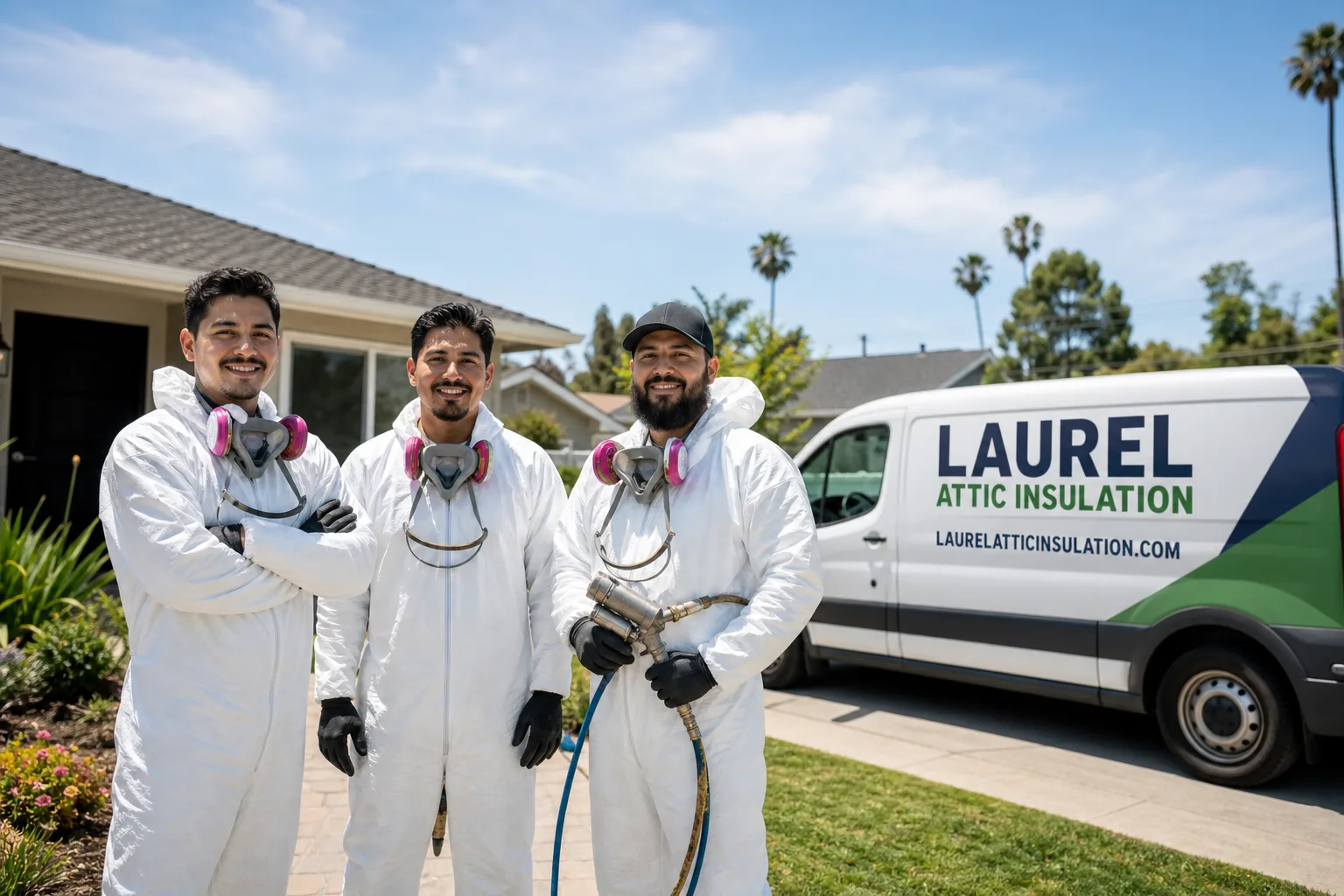
Fast, Reliable Insulation Removal Across Corona
Old attic insulation in Corona fails faster than it should. The Santa Ana winds push fine dust through soffit vents, extreme temperature swings compact loose-fill, and within 12 to 15 years, much of what’s up there has lost its R-value and its usefulness. When that happens, adding new insulation on top just buries the problem. The honest fix is removal, and that’s what our Insulation Removal team does every week in neighborhoods from Corona Hills to South Corona. We’ll come out, assess what’s in your attic, give you a written price before any work starts, and handle the removal and replacement without leaving dust or debris behind. Call (361) 315-4177 and you’ll talk to a live person, 24/7.
Why Laurel Attic Insulation Is Corona’s Preferred Insulation Removal Company
We’re part of the Relay Home Co. family, founded in 2003, and we run every job through The Relay Visibility Guarantee. That means you book, get a live arrival time, watch your technician approach on a map, and receive before-and-after photos once the attic is clean. No vague four-hour windows. No wondering whether anyone is actually coming.
Corona homeowners tend to ask the same question: “Can you actually get here today?” In most cases, yes. Our crews serve Corona directly, and because dispatch coordinates from our Inland Empire office just over the hill, we can usually get to most parts of Corona the same day you call. That includes South Corona, the neighborhoods around Dos Lagos, and homes along the 91 corridor.
Chase Whitaker leads the team, and he’s built the operation around one non-negotiable: every job gets a written price before work starts. If the work isn’t right, the 365-Day Done Right Promise means we make it right, for a full year, in writing. No contractor fog.
Attic Insulation Replacement in Corona
Attic Insulation Replacement in Corona usually means pulling out old, dead loose-fill or batt insulation and installing new material matched to your attic’s actual specs. We see this constantly in homes built during the 1980s and 1990s boom across Corona, where original fiberglass batts have settled, gotten dusty, or been chewed up by rodents. A typical replacement in Corona runs $1,800 to $4,200, depending on attic square footage, access difficulty, and the R-value you need for our climate. We write the price down before anything starts, so there’s no door-step surprise.
When Replacement Is the Right Call
Sometimes the old insulation looks fine until you actually get up there. In Corona, the tell is compaction. If loose-fill has flattened to half its original depth, it’s not insulating anymore. Wind-driven dust from the Santa Anas settles into the fibers, weighing them down and killing the air pockets that do the actual insulating. You can’t fluff it back to life. Removal followed by new blown-in material is the only fix that restores performance.
What We Install After Removal
Once the old stuff is out, we don’t just grab whatever happens to be on the truck. We match material to your attic: blown-in fiberglass for open attics, batts for smaller truss bays, or spray foam where air sealing is the priority. We carry materials from Owens Corning, Johns Manville, and Knauf, among others. You’ll know exactly what you’re getting and why, before the blower fires up.
Moldy Insulation in Corona
Moldy Insulation in Corona is more common than people expect, and it’s usually tied to the wild temperature swings we get. Cold nights followed by 90-degree afternoons create condensation on attic surfaces, especially around HVAC units, furnace flues, and bathroom exhaust fans. That moisture soaks into the insulation and sits there. If you see dark staining, smell mustiness when the AC kicks on, or notice the insulation looks wet or crusty, removal is required before you install anything new. The cost to remove moldy insulation and prepare the attic for replacement in Corona typically runs $2,400 to $5,000, including mold treatment and sanitizing.
Why You Can’t Just Cover It
Laying new insulation over mold doesn’t kill the mold. It hides it. The spores keep spreading through the attic air, and the moisture problem that caused the mold in the first place is still there. We remove the affected material, treat the area, and identify the moisture source, whether that’s a leaky roof boot, an uninsulated HVAC duct, or a bathroom fan venting directly into the attic instead of outside. Fixing the source is what keeps the mold from coming back.
The Corona Moisture Pattern
We’ve done enough moldy insulation jobs in Corona to see the pattern clearly. Homes with attic-mounted furnaces and older ductwork in neighborhoods like Eagle Glen and Corona Ranch tend to develop condensation issues earlier than homes with rooftop package units. The rapid temperature cycle puts stress on anything metal in the attic, and when warm air hits cold duct surfaces, the result is dripping condensation. A thorough removal lets us see the whole picture before recommending a fix.
Trusted Brands We Service in Corona
After we strip out failing insulation in a Corona home, we replace it with materials from brands we trust and can source quickly: Owens Corning for blown-in fiberglass, Rockwool for fire-resistant batts in attached garages and bonus rooms, and CertainTeed for specialty applications like cathedral ceilings. Because our crews work Corona regularly and our supply chain is mature, we don’t have the lead-time problems other contractors hit. Most jobs are completed same-day or next-day with the right material, not a substitute.
Common Insulation Removal Problems We See in Corona Homes
- Compacted loose-fill that looks fine from the attic hatch. Santa Ana wind cycles drive dust into the attic, and that dust mixes with fiberglass or cellulose, killing loft. The insulation looks level but measures half its original R-value. Removal and replacement is the only honest answer.
- Mold near attic HVAC units and furnace flues. Corona’s rapid temperature swings create condensation on cold metal in the attic. That moisture migrates into surrounding insulation. We treat the mold, remove the material, and fix the moisture source before any new insulation goes in.
- DIY removal without air sealing. We get same-day calls after homeowners pull out old insulation themselves and skip sealing. Gaps around top plates, recessed lights, and can vents let dust and pests pour in. We re-seal, then insulate.
- Rodent-damaged batt insulation in older Corona tract homes. Rats and mice nest in warm attic fiberglass, and the droppings and urine soak the material. Removal with proper protective gear and sanitizing is a health issue, not just an upgrade.
Pricing for Insulation Removal in Corona, CA
Insulation removal in Corona runs $1.20 to $2.80 per square foot of attic floor, which means a typical 1,200-square-foot attic costs between $1,450 and $3,350 just for removal. If mold is present, treatment and sanitizing add $800 to $1,700. Full removal plus new blown-in insulation for a standard Corona home typically lands between $2,100 and $5,600 total. Factors that move the number: attic access difficulty, height, how much debris is up there, and whether we’re doing pest cleanup or mold treatment. We give you a written price after an on-site look, and estimates are free. Call (361) 315-4177 to set one up.
We Also Serve Cities Near Corona
Beyond Corona itself, our crews regularly work in Norco, Chino, Chino Hills, and Irvine. If you’re in one of those areas and need Insulation Removal in Corona done right, we’ve got you covered. Same-day scheduling often works for nearby cities, and the same written-price, live-tracking process applies.
Serving Corona, CA - Our Local Coverage Area
We’re based in the Corona area and know this community well. Use the map below to see our service coverage - if you’re nearby, we can almost certainly help.
FAQs About Insulation Removal in Corona
In most cases we can have a crew at your Corona home the same day you call, and removal itself typically takes 3 to 5 hours for an average attic. Larger homes or mold-contaminated material may require a second day. Call (361) 315-4177 and we’ll give you a straight answer on availability, including a written price before the crew shows up.
Yes, and it’s not random. Corona’s daily temperature swings create condensation cycles in attics, particularly on metal ductwork and flue pipes. Homes in the hills and canyon-adjacent areas see it more than homes in flat open tracts. Ask us to check during the estimate; we’ll tell you honestly whether mold is a factor.
You can, but in Corona it’s usually a bad call. The old loose-fill is often compacted and dust-heavy from Santa Ana cycles, which means it’s not doing its job and may be trapping moisture. Adding new material buries the problem. Our honest answer: if the old material has lost its loft, removal is the right move, not covering.
If the material is compacted, moldy, water-damaged, or infested with rodents, it needs removal. If it’s still lofty, dry, and clean but thin in spots, you might get away with topping it off. We’ll tell you which applies during a free attic inspection, and we’ll show you photos from the attic so you can see it yourself.
We install Owens Corning, Johns Manville, Knauf, Rockwool, and CertainTeed, among others. We match the material to your attic’s layout and your budget, and we tell you exactly what’s going in and why. No mystery products. No “whatever was on the truck.”
Written by Chase Whitaker, Owner at Laurel Attic Insulation, serving Corona since 2003.