
Top Signs You Need Insulation Service – Don’t Ignore These
Here’s the short version: the most reliable early signs you need attic insulation in Los Angeles are a second floor that stays 5°F or more hotter than the first floor on a mild day, an AC unit that kicks on and off more than four times an hour, and a house that’s still warm at 10am after a cool LA night. Those show up weeks or months before your SCE bill spikes. If you’d rather not climb into the attic yourself, call (361) 314-0118 and we’ll diagnose it for free.
But if you want to catch the problem before it costs you real money, keep reading. Most articles will tell you to watch for high energy bills and drafty rooms. That’s like telling someone to watch for smoke to detect a fire. Your energy bill is the last place failing insulation shows up. By the time SCE or SoCalGas reflects the problem, you’ve already been losing conditioned air for a full season.
- Key takeaways: Insulation fails silently long before your bill spikes. The second-floor temperature split is the earliest reliable indicator in Los Angeles homes. Roof rat activity is an insulation problem first. HVAC short-cycling points to attic thermal failure. A $25 infrared thermometer can map exact failure zones. Most attic insulation jobs in LA run $900 – $2,400 depending on square footage and R-value needed.
Your Energy Bill Is the Last Place Insulation Failure Shows Up
We’ve pulled batts out of attics in Los Angeles that looked fine from the living room but were doing almost nothing. Here’s the thing about insulation: it doesn’t fail visibly. It fails slowly, through compression, moisture, pest damage, and simple settling. By the time you notice the bill, the insulation has been underperforming for months.
In our experience, the average LA homeowner loses roughly $15 to $40 per month to degraded attic insulation before they call us. That’s because the attic is where your conditioned air goes to die. Heat rises. If your attic floor is under-insulated, your AC is essentially paying to cool the neighborhood, not your house.
So rather than waiting for SCE to send you a nasty surprise, look for these five signals. They’re subtle. They show up early. And they’re specific to how homes behave in Los Angeles.
Signal One: The Second-Floor Temperature Split on a Mild LA Day
Here’s a test you can do this afternoon. On a mild Los Angeles day, around 75°F, check the temperature on your first floor and your second floor. If the upstairs is more than 5°F warmer than downstairs, your attic insulation is underperforming. That’s the earliest reliable indicator we know.
Why 5 degrees? Because a well-insulated attic should keep the upstairs within a few degrees of the downstairs on a non-extreme day. When the split hits 5°F or more, it means heat from the attic is radiating down into your second-floor ceiling. The most common culprit in Los Angeles homes is batts that have been compressed over time. Compression kills R-value, the number that measures how well insulation slows heat from moving through your ceiling. Compressed batts lose up to 40% of their rated R-value.
This test works best between March and November in LA, when the sun is doing real work on your roof. If you fail it, don’t panic, but don’t ignore it either. The second floor isn’t magically hotter for no reason.
Signal Two: Roof Rat Entry Points You Keep Finding
This is the one most people get wrong. In Los Angeles, if you keep seeing evidence of roof rats, the problem isn’t just pests. It’s insulation. Here’s why.
Roof rats love attics. They enter through small gaps in eaves, roof vents, or fascia boards. Once inside, they burrow through insulation, compress it into tunnels, and void entire sections. A roof rat problem is an insulation problem before it’s a pest problem, because the damage they do to R-value happens immediately. They compress batts. They strip paper facing. They nest, which means they’re creating dead zones where heat pours through your ceiling.
We see this constantly in older Los Angeles homes. A homeowner calls us for insulation because their upstairs is hot, and we find rat tunnels through the fiberglass. The homeowner had been trapping rats for a year and never connected it to their comfort problem.
If you’ve got rats, you need two things: exclusion work and insulation replacement. The exclusion keeps them out. The insulation replacement restores the thermal barrier they destroyed. Both together are the only real fix.
Signal Three: Your AC Is Short-Cycling More Than Four Times Per Hour
Short-cycling is when your AC unit turns on, runs for a few minutes, shuts off, and repeats. On a hot Los Angeles day, a properly sized AC should run in longer, steadier cycles. If your unit is cycling on and off more than four times per hour, pay attention. It might be a sign of insulation failure, not an HVAC problem.
Here’s the logic. Your AC works by removing heat from your indoor air. If your attic insulation is degraded, heat is constantly entering from above. That means the indoor temperature rises faster, which triggers the thermostat more often. The system starts and stops repeatedly because it’s caught in a losing battle. Short-cycling is the mechanical expression of a thermal problem.
Most homeowners call an HVAC tech, who may or may not check the attic. We’ve seen compressors replaced when the real issue was six inches of settled, rodent-compressed fiberglass. If your unit is short-cycling and your attic insulation hasn’t been touched in 15 years, check the insulation before you buy a new condenser.
Signal Four: The Morning Cool-Off Lag
Los Angeles has a gift: cool nights. Even in summer, the temperature drops after sunset, and that cool air works on your house all night. A well-insulated home takes advantage of it. By 8am, a properly insulated LA home should be comfortable, maybe even cool. The overnight cool has soaked in, and the insulation is holding it.
If your home isn’t comfortable until 10 or 11am, your attic is working against you. That’s the morning cool-off lag. It means the cool air from overnight is leaking out and the heat from the morning sun is getting in. The insulation that should be holding the temperature is letting it move freely in both directions.
This is a signal that shows up every single day in Los Angeles, even when your bill looks fine. The bill catches up eventually, but the lag tells you the truth now. If you’re cranking the AC by 9am on a day that started in the low 60s, something is wrong up top.
Signal Five: Map Your Attic Floor with a $25 Infrared Thermometer
If you want to know exactly where your insulation is failing, you can do this yourself. Go to any hardware store in Los Angeles and buy a non-contact infrared thermometer. It costs about $25. Point it at your attic floor, not at the air. You’re reading surface temperatures, looking for hot spots.
Walk the attic as safely as you can, aiming the thermometer at each section of the floor. A well-insulated attic floor should read consistently across the space. Hot spots mean missing, compressed, or voided insulation. Cold spots in winter mean the same thing, in reverse. Map the zones where the temperature deviates by more than 10°F from the surrounding area. Those are your failure zones.
This is the same diagnostic approach we use before recommending a job. It shows exactly which sections need attention, which helps us give you a written price based on the actual square footage, not a guess. It also puts you in control. You don’t need anyone else to tell you the insulation is failing. The thermometer does.
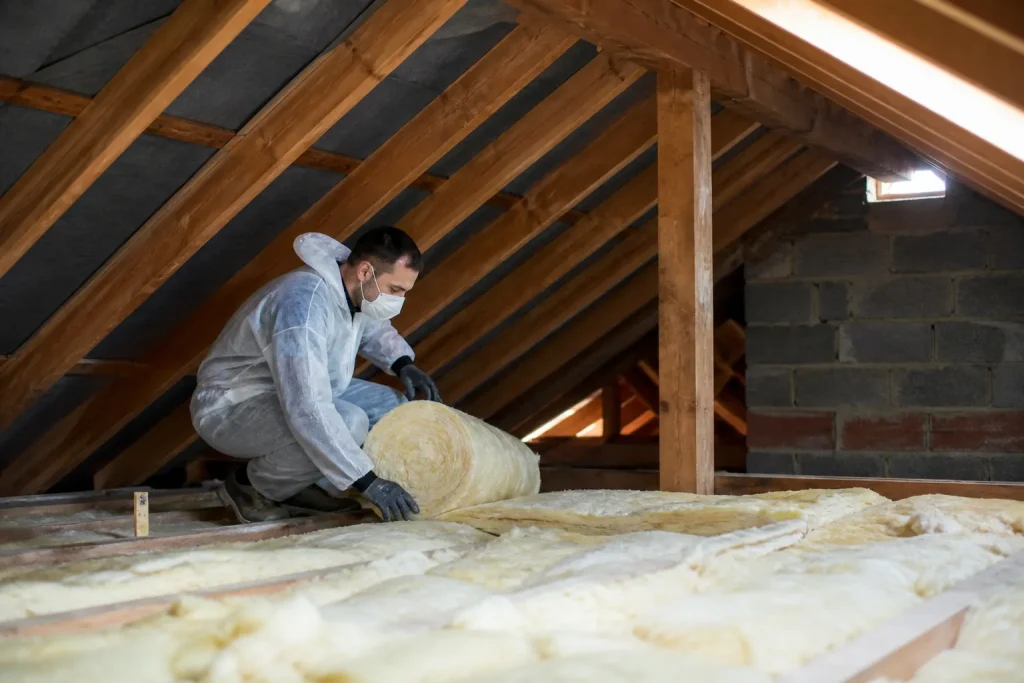
A note on safety: attics are dusty, hot, and often have exposed nails. Wear a mask, long sleeves, and gloves. If the attic is steep or difficult to navigate, don’t do it. That’s exactly when you should call a pro.
When to Call a Pro
If any of these signals sound familiar, you have two options. You can climb up, map the problem, and maybe tackle a small section yourself. Or you can call someone who does this every day and get an answer in an hour. Honestly, most attics in Los Angeles are worth having a professional look at, especially if the insulation is original to a house built before 1990 or if you’ve had any pest activity.
If you want a second set of eyes, call (361) 314-0118. We’ll send a background-checked technician who arrives at a live, trackable time, not a vague four-hour window. You’ll get a written price before any work starts. And every job includes a Done Right Promise: if it’s not done right, we make it right, backed in writing.
Related services in Los Angeles: if we find that your existing insulation is beyond saving, we offer Insulation Removal in Los Angeles to clear out the old material before new installation. For attics with access issues or unusual rooflines, Spray Foam Insulation in Los Angeles can seal and insulate in one pass. And for the most common job we do, see Attic Insulation in Los Angeles.
The Bottom Line
Failing insulation doesn’t announce itself. It whispers. A second floor that’s 5°F too warm. An AC that won’t run a full cycle. A house that’s still hot at 10am after a cool LA night. Rat activity you keep chasing. Hot spots on an attic floor you can only see with a thermometer. None of these are emergencies on their own, but together they paint a clear picture: your attic is bleeding conditioned air, and your bill is the last thing that will tell you.
Most attic insulation jobs run $900 – $2,400 depending on square footage and R-value needed. That’s real money, but it’s often less than a year of overpaying for AC that’s fighting a losing battle. If you’re in Los Angeles and think your attic might be the problem, Laurel Attic Insulation offers free estimates. Call (361) 314-0118 and we’ll give you a straight answer.
Frequently Asked Questions
The clearest early sign is a second floor that stays 5°F or more hotter than the first floor on a mild day, when it’s around 75°F outside. That temperature split means heat is getting through your ceiling. You can also check for hot spots on your attic floor with a $25 infrared thermometer. If any of those signs match, call (361) 314-0118 for a free look.
Compressed or settled insulation. Over time, batts lose loft, which kills R-value. Roof rats make it worse by tunneling and voiding sections. In our experience, most LA attics we open up have at least some compression, especially in homes built before 1990. The fix is removal and fresh installation, priced in writing before anything starts.
In most cases, replacement is the smarter move. Patching a few thin spots doesn’t fix compressed batts, rodent damage, or settled material elsewhere in the attic. A full removal and reinstall costs more upfront, but it addresses the whole thermal barrier at once. Most full attic insulation jobs in LA run $900 – $2,400. Call (361) 314-0118 for an exact quote. Estimates are free.
Yes. We offer live arrival tracking, so you’ll know exactly when a background-checked technician is on the way. You’ll get a written price before any work begins, and if the repair fails within 365 days, we come back. A second visit after a failed repair is free, no charge, no argument. Call (361) 314-0118 to schedule.
Written by the team at Laurel Attic Insulation.
Need Insulation Help?
Call Laurel Attic Insulation - licensed & insured, here with fast after-hours help in Los Angeles.
(361) 314-0118