
5 Mistakes to Avoid With Insulation Removal
Most insulation removal mistakes happen before the vacuum ever turns on. Skipping an asbestos test on a pre-1980 Los Angeles home, leaving HVAC vents unsealed while pulling fiberglass, or ignoring the roof leak that wrecked the insulation in the first place will cost you more than the removal itself. Here’s what actually goes wrong, and how to avoid each one. If you’d rather skip the risk entirely, call (361) 314-0118 and we’ll walk you through the process.
Mistake #1: Skipping the Asbestos Test on Older Los Angeles Homes
This is the one that turns a $1,800 insulation job into a legal and medical problem. Homes built before 1980 in Los Angeles frequently contain vermiculite insulation, and some vermiculite deposits are contaminated with asbestos. Certain blown-in fiberglass from that era used asbestos-containing binders, too. You cannot tell by looking. You cannot tell by touching it. The only way to know is testing.
California law treats asbestos as a serious hazard material. If you disturb it during removal and it gets airborne, you’re not just dealing with a messy attic. You’re dealing with regulated disposal, potential exposure to anyone in the home, and remediation costs that can hit five figures. In Los Angeles, the rules are enforced, not suggested. Vermiculite from the Libby, Montana mine, which supplied much of the country’s vermiculite for decades, is notoriously asbestos-positive, and plenty of it ended up in Southern California attics.
What to do instead: if your home was built before 1980 and you’re not sure what’s up there, get a sample tested before anyone vacuums anything. A certified lab will give you a definitive answer in a few days. If it’s positive, removal becomes a containment project with different equipment, different protocols, and different disposal paperwork. That’s not a DIY job. That’s a call a licensed abatement contractor job. We’ve done enough pre-1980 removals in Los Angeles to know the difference between a routine pull and a hazmat situation, and you want someone who can spot it before the dust starts moving.
Mistake #2: Leaving HVAC Vents Open During Removal
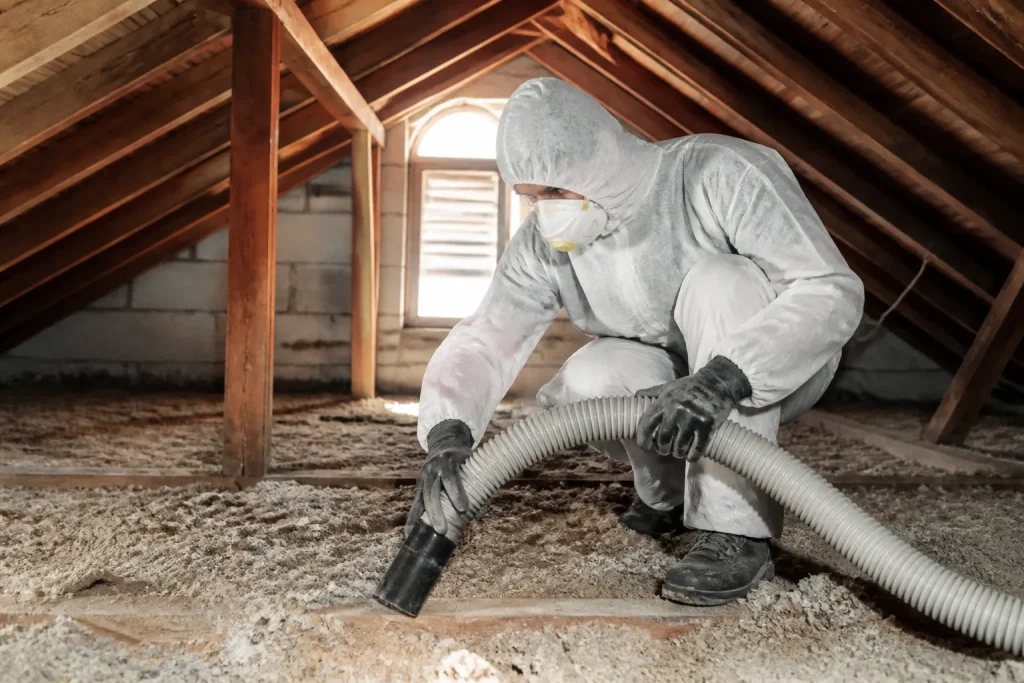
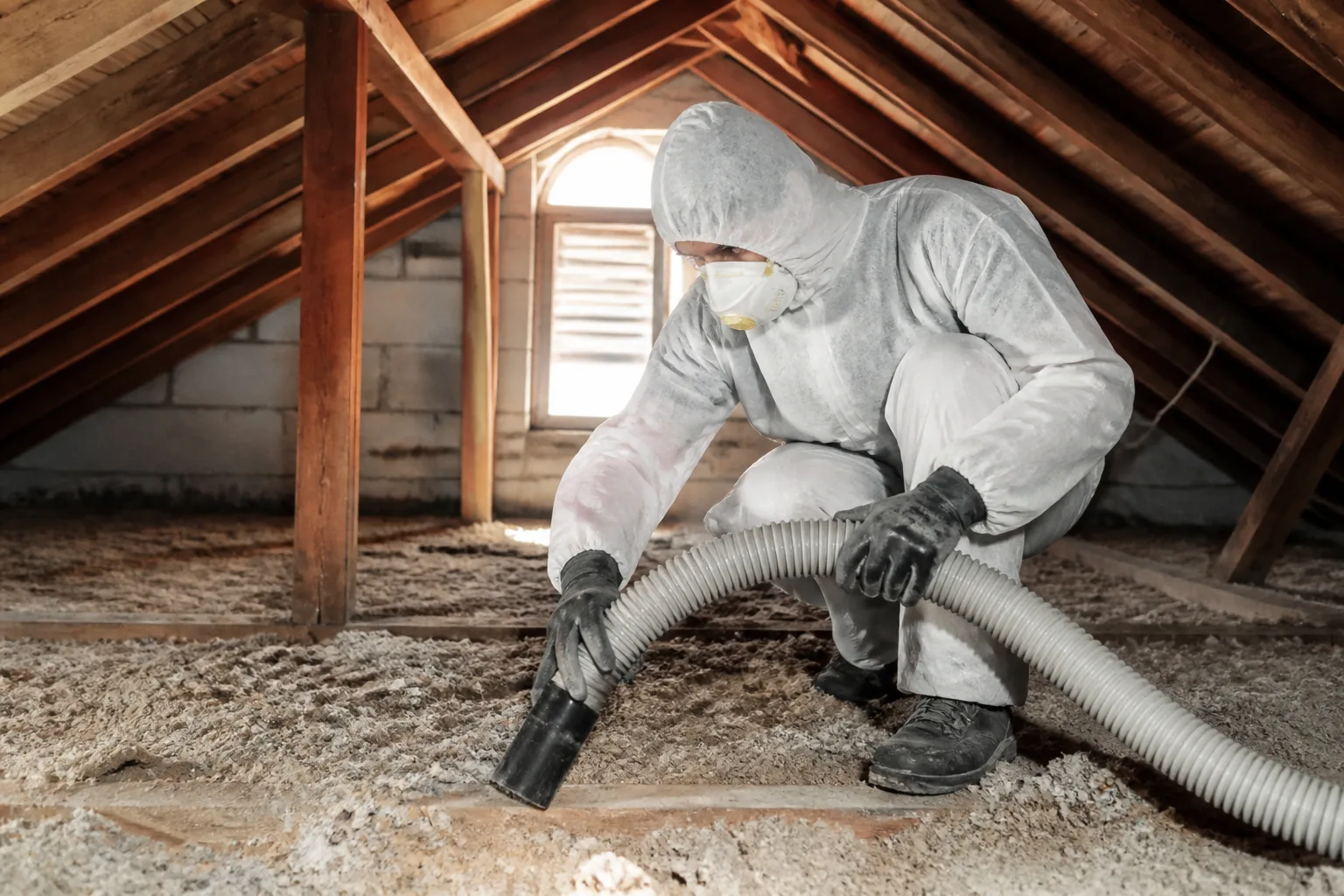
When you vacuum old insulation out of an attic, you’re agitating years of settled fiberglass, cellulose dust, rodent droppings, and whatever else has been living up there. If your HVAC supply or return vents are open, the negative pressure from the removal equipment pulls that particulate straight into your ductwork. Then your air handler kicks on and distributes it through every room in your house.
We pulled one out of a house over in Silver Lake last year where the homeowner had paid a low-bid crew to remove old blown-in fiberglass. They sealed nothing. Two weeks later, the family was still finding glass fiber dust on their kitchen counters every morning. Their ducts looked like the inside of a lint trap, and the fix cost more than the removal.
The procedure is straightforward: seal every supply and return vent with plastic sheeting and tape before removal starts. Keep them sealed until the attic is fully vacuumed and wiped down. Then, before you reinstall new insulation, run a quick visual check of the ducts. If old insulation particles are already in there from years of poor air sealing, that’s the moment to get the ducts cleaned, not after you’ve buried them under new material. This step takes thirty minutes and prevents a whole-house contamination event. Any crew that skips it is cutting a corner you’ll pay for later.
Mistake #3: Removing Insulation Without Fixing the Source Problem First
Insulation rarely fails on its own. Something usually kills it: a roof leak that soaked the fiberglass batts, rodents that chewed tunnels through the cellulose and turned it into a latrine, or decades of air leakage that turned the material into a compressed, ineffective mat. If you remove the damaged insulation and reinstall fresh material without addressing the root cause, you’re scheduling a repeat of the same job in two or three years.
In Los Angeles, we see this constantly with flat-roof homes and older Spanish-style houses. The roof leaks during a heavy winter rain, the insulation in the low spots absorbs the water, and mold starts within days. Homeowners call us for removal, and we ask one question first: has the roof been fixed? If the answer is no, the smart move is to fix the roof first, then remove the damaged insulation, then install new material. Doing it in reverse means your new insulation is one storm away from the same fate.
Same logic applies to rodent problems. If rats or squirrels have been living in your attic, the insulation removal should happen after the entry points are sealed and the animals are gone. Otherwise, you’re handing fresh, clean insulation to the next family of rats as a housewarming gift. The removal and the fix go together. Skipping the fix is the most expensive cost-cutting decision a homeowner can make, because you literally pay for the same job twice.
Mistake #4: Treating Old Insulation Like Regular Trash
California has specific rules about how used insulation gets disposed of, and Los Angeles County enforcement is not theater. Old fiberglass and cellulose that has been in an attic for twenty years isn’t clean fill. It’s often contaminated with dust, pest waste, and sometimes mold. Tossing it in a dumpster or leaving it bagged on the curb for the weekly pickup violates local waste regulations and can earn you a fine from the city.
The disposal pathway matters. When we do an insulation removal in Los Angeles, the material gets bagged in heavy-duty containment bags during removal, sealed on-site, and transported to a facility that accepts construction and demolition waste with the proper classification. Contaminated material from rodent-damaged attics or water-damaged insulation has to be handled with additional care, especially if mold is present. The bags used for contaminated material are not the same bags used for clean fiberglass, and the facility fees differ.
We recommend asking any contractor you’re considering one question: “Where does the old insulation go after it leaves my house?” If they can’t answer that question in about ten seconds with a real facility name or a licensed hauler, they’re likely dumping it somewhere they shouldn’t. The disposal is part of the job, not an afterthought, and a legitimate removal includes it in the written price. Our quotes include the full disposal cost, so there’s no surprise line item at the end. What you see on the written estimate is what you pay, period.
Mistake #5: Skipping Post-Removal Air Sealing Before New Insulation
This is the step most homeowners never know to ask about, and it’s the one with the biggest impact on your energy bills. When the old insulation is out and the attic is bare, you have a once-in-a-decade opportunity to see every crack, gap, and penetration in the attic floor. Those gaps are where conditioned air escapes your living space and enters the attic. In a Los Angeles summer, that means your air-conditioned air is literally floating up through your ceiling and heating the underside of your roof.
Before new insulation goes in, the attic floor should be air-sealed. That means sealing gaps around recessed light fixtures, plumbing vent pipes, electrical penetrations, chimney chases, and the top plates of interior walls. In most Los Angeles homes built before 1990, the cumulative air leakage through these gaps adds up to the equivalent of leaving a window open year-round. Insulation slows heat transfer. It does not stop air movement. If you’re counting on insulation alone to fix a drafty, expensive-to-cool house, you’ll be disappointed.
The sequence is what matters: remove, seal, then insulate. If you insulate first and try to seal later, you’re digging through new material to find the gaps. If you seal first, the new insulation performs exactly as rated. We use professional-grade air-sealing materials, and when the removal is done, the sealing pass happens on the same visit, before a single batt or bag of blown-in goes back in. Homeowners who get this sequence right routinely see meaningful drops in summer cooling costs, because the AC is no longer fighting a constant leak into the attic.
How Much Does Insulation Removal Cost in Los Angeles?
Most insulation removal jobs in Los Angeles run between $1,200 and $3,800, depending on square footage, accessibility, material type, and whether contaminated material requires special handling. A standard attic under 1,500 square feet with clean fiberglass batts will land near the lower end. A larger attic, or one with blown-in cellulose that has been rodent-damaged, pushes toward the higher end. If asbestos testing comes back positive, the number changes significantly and the job becomes a regulated abatement project with different pricing entirely.
- Asbestos testing (pre-1980 homes): $150 – $400 per sample, depending on the lab and turnaround time
- Basic removal, clean fiberglass batts, under 1,500 sq ft: $1,200 – $2,100
- Blown-in cellulose or fiberglass removal, same size: $1,800 – $2,800
- Contaminated material (rodent waste, mold) requiring special handling: $2,500 – $3,800+
- HVAC vent sealing and post-removal air sealing: typically $400 – $900, depending on the number of penetrations
These are real ranges we see in Los Angeles homes every month, not padded estimates. The variables are the size of the attic, the condition of the material, and whether the space allows full access without removing roof decking or working around ductwork. When we give a written price, it includes removal, disposal, and the basics of protective setup. If the estimate you’re comparing doesn’t include disposal, ask where the material goes. That’s the line item that separates honest pricing from a cheap bid with a surprise at the end.
When to Call a Pro
If you’re removing a small amount of clean fiberglass from an accessible garage ceiling, and you have a proper respirator, gloves, and a plan for the waste, that’s one thing. But the scenarios below are not DIY territory. They’re the ones that go wrong in ways that cost more than calling someone on day one.
- Your home was built before 1980 and the insulation type is unknown or appears to be vermiculite
- You’ve had rodents in the attic and the insulation is visibly soiled or has a strong odor
- You can see water staining, sagging material, or any sign of mold
- The attic has limited access and you’d be working in tight, hot, confined space
- You want the job done with photo proof, a written guarantee, and no surprise costs at the end
Related services in Los Angeles: Insulation Removal in Los Angeles for full removal and disposal, Attic Insulation in Los Angeles for the reinstall, and Spray Foam Insulation in Los Angeles if you’re upgrading to air-sealing foam after the pull.
The Bottom Line
Insulation removal is a sequence, not an event. Test for asbestos before anything starts on pre-1980 homes. Seal the HVAC vents before the vacuum runs. Fix the roof leak or rodent problem before reinstalling. Follow California disposal rules instead of treating old insulation like weekend trash. And after the space is bare, air-seal before new material goes in. Miss any one of those five steps, and you’ve created the conditions for a callback, a contamination issue, or a code violation.
If you’re in Los Angeles and want the job done in that order, with a written price before anything starts and before-and-after photos of the whole process, call Laurel Attic Insulation at (361) 314-0118. Estimates are free, and every job includes our Done Right Promise: if it’s not right, we make it right, in writing, with a free second visit if the work fails.
Frequently Asked Questions
You can’t tell by looking at it. If your Los Angeles home was built before 1980 and contains vermiculite or certain older blown-in materials, get a sample tested by a certified lab before any removal begins. Pre-1980 homes are the highest-risk category, and California law requires proper handling if asbestos is present.
You can remove small amounts of clean, identifiable fiberglass batts from an accessible space if you have proper protective equipment and a legal disposal plan. But if the material is old, potentially contaminated, or you’re not certain what it is, a professional removal is safer and often cheaper than the cost of fixing a bad DIY job. Call (361) 314-0118 and we’ll tell you honestly whether your job is a candidate for DIY or not.
Adding new insulation on top of old, compressed, or contaminated material is a temporary fix. The old material is still there, still holding moisture or pest waste, still underperforming. In many Los Angeles homes, removal first is the more cost-effective route over a five-year period, because you’re not paying to insulate over a problem that will keep degrading the new material.
A typical attic removal in a Los Angeles home takes four to eight hours for the removal and cleanout, with air sealing and reinstallation often completed the same day or the following morning. Larger attics or contaminated material extend the timeline. We give you a live arrival time and photo updates throughout, so you’re never guessing when the crew will show up or what got done.
Written by the team at Laurel Attic Insulation.
Need Insulation Help?
Call Laurel Attic Insulation - licensed & insured, here with fast after-hours help in Los Angeles.
(361) 314-0118