
Attic Insulation in Sonoma, CA: What It Costs and Why It Fails Here
Attic insulation in Sonoma usually runs $900 to $3,400 depending on square footage, R-value target, and whether we’re topping up existing material or removing failed insulation first. Same-day service is available, and most jobs wrap within a single visit. Our crews know Sonoma’s housing stock well enough to spot problems before they show up on your energy bill. Call (361) 315-4177 for a written quote before any work begins.
Fast, Reliable Attic Insulation Across Sonoma
We run crews into Sonoma every day, from the hills off Lovall Valley Road to the cul-de-sacs behind Sonoma Plaza. When you call, a live person answers. You’ll get a written price before we show up, a live arrival time on your phone, and photo proof of every layer we install or remove. That’s the book-a-contractor-like-a-rideshare experience we’ve run since 2003. If your attic is baking your upstairs bedrooms or your heating bill spiked over a mild Sonoma winter, we can diagnose it fast. Most estimates take under an hour. Call (361) 315-4177 and Chase Whitaker or a senior tech will walk the job with you.
Sonoma Attics Face a Wildfire-Specific Problem Most Contractors Miss
Sonoma’s 2017 wildfire burn zones and ongoing fire risk created a failure mode we see nearly every week: ember-entry gaps and radiant-heat damage that standard home inspections don’t flag. Blown-in fiberglass from the 1990s or 2000s does nothing to stop an ember that comes through an unsealed gable vent. Our crews carry ember-resistant mesh and intumescent sealant on every call because we treat every Sonoma attic as if fire season starts tomorrow. That’s not something we learned in a brochure. It’s what the last eight Septembers taught us.
Why Laurel Attic Insulation Is Sonoma’s Preferred Attic Insulation Company
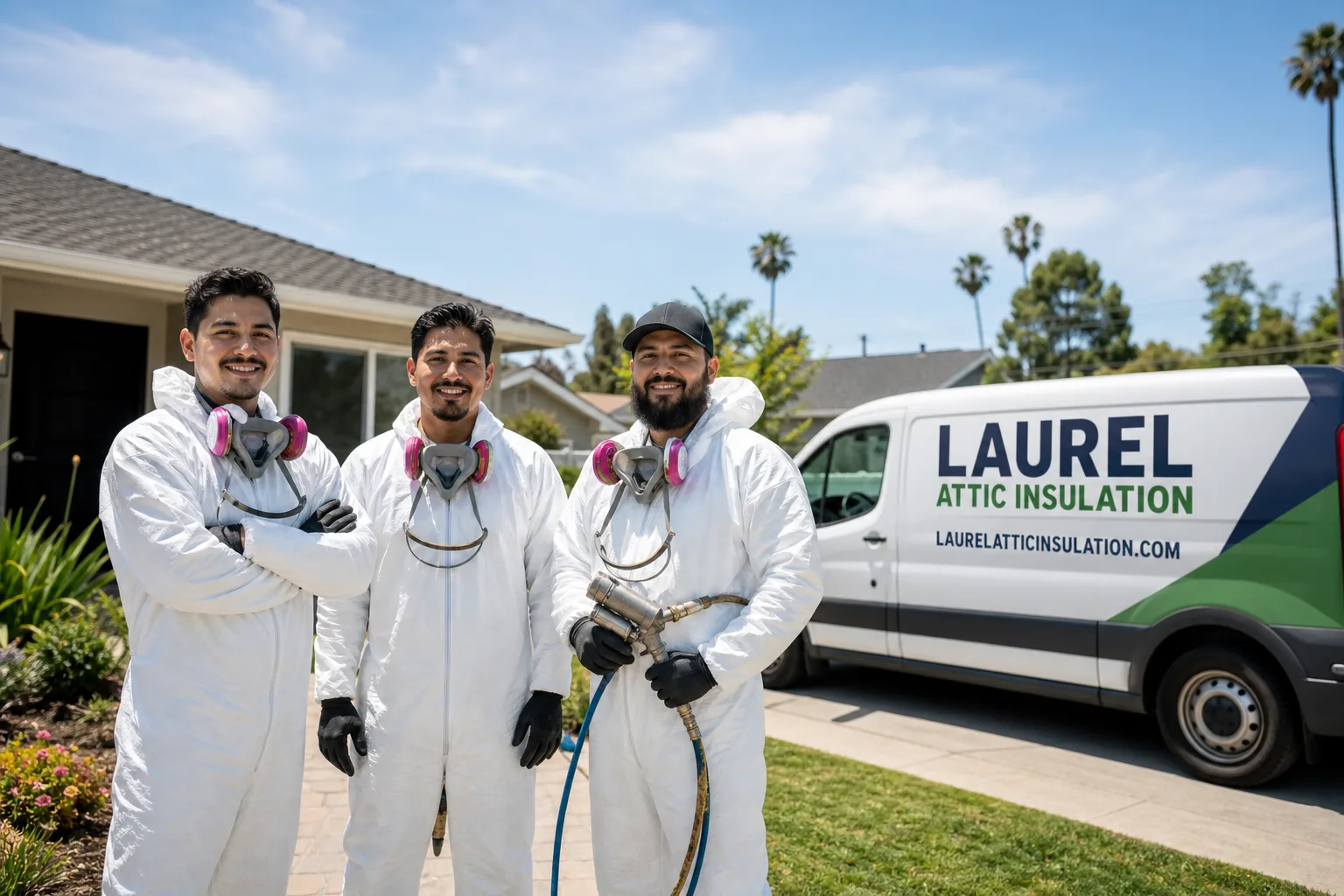
Laurel Attic Insulation is the insulation specialist inside the Relay Home Co. family, and we built our whole process around visibility. You get a written price before anything starts. You get before-and-after photos. You get a trackable arrival time, not a four-hour window where you’re trapped at home waiting. Sonoma homeowners call us because we answer at 3 a.m. when a rodent tears through an attic hatch and insulation starts raining into the hallway. Our techs are background-checked, uniformed, and know the local building quirks on streets like East Spain and Broadway.
We don’t trade on vague promises. Every job carries the 365-Day Done Right Promise in writing. If something isn’t right, we return and make it right within that year. If a repair fails, the second visit is free. No argument, no invoice for the callback. Chase Whitaker has spent two decades in the Bay Area insulation trade, and his name goes on every job we book in Sonoma.
Attic Ventilation in Sonoma
Attic ventilation in Sonoma’s dry, hot summers is the difference between an attic that stays at 120°F and one that hits 160°F and cooks your insulation from above. When we air-seal and insulate, we almost always find ventilation problems that previous crews ignored: soffit baffles missing, ridge vents blocked, or old powered fans that seized years ago. Proper ventilation keeps Owens Corning or Knauf batts from degrading early and stops moisture from condensing against the roof sheathing on cold winter mornings off Arnold Drive.
Baffles and Soffit Prep Before Insulation
In older Sonoma bungalows, insulation often gets stuffed shoulder-deep against the roof deck because no baffles were installed. The baffle is the channel that lets outside air flow from the soffit up to the ridge without being blocked. Without that channel, heat builds, batts bake, and your cooling bill climbs every July. We install baffles before adding or replacing material, every time.
Seasonal Timing for Ventilation Work in Sonoma
Late spring and early fall are the best windows. The ground isn’t muddy, the attic isn’t 140 degrees inside, and you get the work done before or after the worst heat. But we don’t turn down summer calls. If your upstairs has been unbearable since June, we’ll get up there with cooling fans running and fix the airflow problem that same week.
Radiant Barrier in Sonoma
A radiant barrier in Sonoma’s sun-baked attics reflects heat away before it ever reaches the insulation layer below. It’s a foil-faced material stapled to the underside of the roof rafters, and in our climate it regularly drops attic temperatures 20 to 30 degrees on a 100-degree day. That’s not marketing talk – we measure it with infrared before and after. For homes along Sonoma Valley’s east slope, where late-afternoon sun hammers the roofline, it’s one of the best ROI upgrades we install.
When a Radiant Barrier Is Worth It in Sonoma
If your attic has full afternoon sun exposure, a dark comp-shingle roof, and blown-in or batt insulation at R-30 or below, a radiant barrier makes sense. We typically recommend it as part of a top-up or replacement, not as a standalone bandage. Combined with air sealing and ember-resistant vent covers, it turns a vulnerable Sonoma attic into a more fire-resilient and cooler space.
Radiant Barrier with Foam and Batt Combine
We often pair radiant barrier with sprayed Icynene or Demilec foam around the attic hatch and can-light penetrations, then blow fresh fiberglass on top. The barrier handles the radiant load from the roof deck; the insulation handles conductive heat. It’s a two-layer defense that works especially well in Sonoma’s older ranch homes.
Trusted Brands We Service in Sonoma
We stock and install Attic Insulation products from Owens Corning, Johns Manville, and Rockwool, matched to your specific attic rather than whatever is rolling around in the truck. Owens Corning ProPink blown-in fiberglass is our go-to for Sonoma’s flat-ceiling ranch homes. Rockwool’s stone wool batts get the nod when fire resistance is the top priority, which in burn-scar-adjacent neighborhoods it often is. We keep bulk materials staged at our San Francisco Bay Area dispatch office, so Sonoma jobs don’t stall waiting on supply.
Common Attic Insulation Problems We See in Sonoma Homes
- Shrunk and debonded spray foam: Icynene and Demilec foam applied during earlier retrofit work often shrinks and pulls away from roof sheathing after several of Sonoma’s hot, dry summers. The result is an open air channel that lets heat in and embers reach the roofline. We remove the failed layer and reseal properly.
- Insulation stuffed over knob-and-tube wiring: Older bungalows, particularly around the Sonoma Plaza historic district, still have live knob-and-tube. Uneducated crews blow insulation over it, creating a fire hazard and blocking the airflow those attics desperately need.
- Unsealed gable and soffit vents letting embers through: The most overlooked failure in wildfire-prone Sonoma. Standard fiberglass batts from Johns Manville or CertainTeed provide zero ember resistance. We add ember mesh and intumescent caulk at every vent opening we touch.
- Rodent-damaged insulation around attic hatches: Sonoma’s older homes have imperfect roof transitions where rodents enter. They shred insulation, nest in batts, and leave droppings that degrade air quality. We remove contaminated material and air-seal the path.
Pricing for Attic Insulation in Sonoma, CA
A blown-in top-up for a typical 1,500-square-foot Sonoma home runs $900 to $1,400. Full replacement with air sealing and ventilation prep lands between $1,800 and $3,400. Batt insulation for exposed attics falls in the $1,200 to $2,200 range. Radiant barrier adds $1,000 to $1,600 depending on roofline complexity. Prices include the written quote, live tracking, photo proof, and our 365-Day Done Right Promise. We never adjust the number at the door. Call (361) 315-4177 for a line-item breakdown specific to your house.
Last week we responded same-day to a 1920s bungalow off East Napa Street where the homeowner had seen insulation fibers blowing out of soffit vents during a wind event. Our tech found a rodent-compromised Icynene spray foam layer that had crumbled around the attic hatch and three unsealed recessed can lights, letting both air and embers through. We removed the failed foam, air-sealed the penetrations with intumescent caulk, and blew in Owens Corning ProPink L77 to R-38, restoring both thermal and ember resistance.
We Also Serve Cities Near Sonoma
Our techs regularly run routes through Sonoma and the surrounding communities, including Boyes Hot Springs, Petaluma, Novato, and Cotati. If you’re just outside city limits or on the Fetters Hot Springs side of the valley, we still cover your street with the same same-day response and written pricing.
Serving Sonoma, CA - Our Local Coverage Area
We’re based in the Sonoma area and know this community well. Use the map below to see our service coverage - if you’re nearby, we can almost certainly help.
FAQs About Attic Insulation in Sonoma
Yes. Standard fiberglass batts and blown-in fiber provide no ember resistance at all. Homes in and near Sonoma’s 2017 burn zones should have ember-resistant mesh over gable and soffit vents, intumescent caulk at all penetrations, and ideally Rockwool stone wool or a radiant barrier at the roof deck. These materials resist ignition and slow heat transfer far better than standard fiberglass. Call (361) 315-4177 and we’ll assess your venting and material in one visit.
Yes, in most cases. We dispatch from our San Francisco Bay Area office with crews already staged for Sonoma routes, so mornings call in, afternoons get work done. For urgent failures like rodent damage or exposed wiring, we prioritize you same-day whenever a crew is nearby. The written quote still comes before anything starts.
Insulation stuffed against the roof deck because no ventilation baffles were ever installed. That traps heat, degrades the batts, and raises your cooling load every summer. The fix is removing the blocked sections, installing baffles, air-sealing, and topping up to R-38 or R-49. We do that combination nearly every week in Sonoma’s pre-1960 neighborhoods.
It makes sense for most Sonoma homes with full afternoon sun exposure and lower R-value insulation. It’s not overkill in our climate, where 100-degree attic temps are normal from June through September. The barrier drops attic temperature meaningfully and extends the life of whatever insulation sits below it. We’ll show you the measured difference on a job walkthrough.
If the material is dry, intact, and not rodent-contaminated, a top-up is usually enough. If there’s mold, moisture damage, ember intrusion, or degraded spray foam, replacement is the honest call. We’ll show you photos and let you decide with the numbers in front of you. A free estimate makes the decision easy. Call (361) 315-4177.
Written by Chase Whitaker, Owner at Laurel Attic Insulation, serving Sonoma with written-price insulation work and same-day response.