
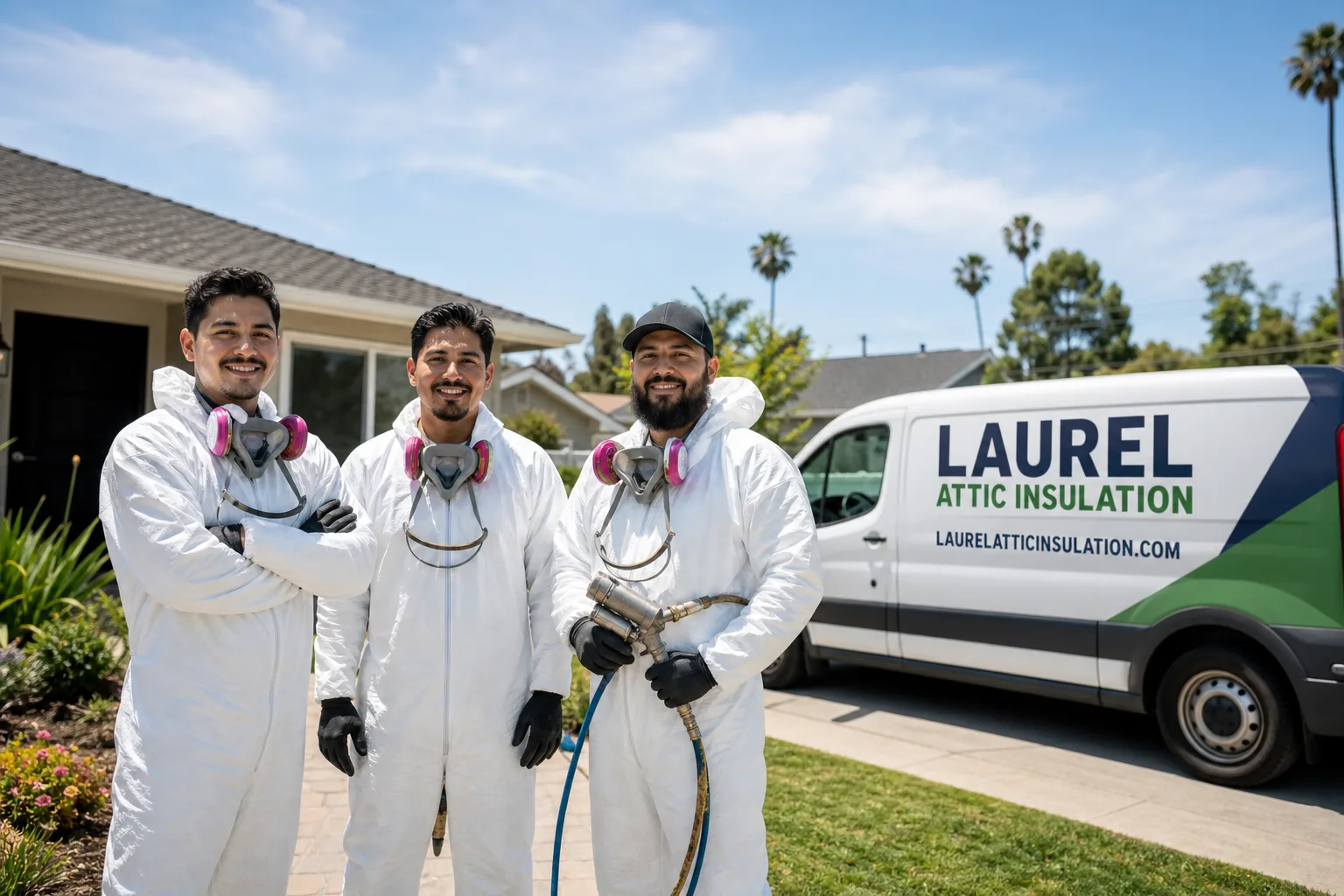
Fast, Reliable Attic Insulation Across Running Springs
Attic insulation in Running Springs has to handle conditions most Southern California homes never face: heavy Sierra-adjacent snow, freeze-thaw cycles, and summer sun that bakes rooftops at 6,000 feet. When insulation gets wet from ice damming or gives out under mountain temperature swings, your heating bills climb and ceilings show water stains. Our crews respond to Running Springs calls the same day in most cases. We carry the materials mountain homes actually need, from high-R-value batts to radiant barrier that cuts summer attic heat. Call (361) 315-4177 for a written quote before any work starts.
Why Laurel Attic Insulation Is Running Springs’s Preferred Attic Insulation Company
Running Springs homeowners deal with a specific set of insulation failures, and most insulation contractors based down the hill don’t see them often enough to diagnose them fast. We do. Our technicians work in Running Springs regularly, from the Highway 18 corridor up to Arrowhead Highlands and over toward the Snow Valley side. We know what a compressed R-11 batt looks like after three winters of snow load, and we know how to fix the ventilation problem that caused it, not just swap the material.
Laurel Attic Insulation operates under the Relay Visibility Guarantee, which means you get a live arrival time, before-and-after photos of the attic, and a written price before anything starts. No four-hour windows. No door-step pricing changes. Chase Whitaker leads our crews, and he holds every job to a 365-Day Done Right Promise: if the work isn’t right, we make it right, in writing, for a full year. That’s the standard we bring to every cabin, A-frame, and mountain home in Running Springs.
Radiant Barrier in Running Springs
Radiant Barrier in Running Springs is not a luxury add-on. At this elevation, south-facing roof planes take direct, high-altitude UV for hours every summer afternoon, and attics without a radiant barrier routinely climb past 140 degrees. That heat soaks through the ceiling into living space and degrades batt insulation faster than you’d see in San Bernardino or Redlands. A radiant barrier, properly stapled to the underside of the rafters, reflects that heat before it ever reaches the attic floor.
How a Radiant Barrier Fights Mountain Heat
We install perforated radiant barrier foil across rafter bays, leaving the eave and ridge vents clear so airflow still moves. In Running Springs homes, we often pair it with vent baffles and a ridge vent check. The combination drops attic temperatures 20 to 30 degrees in July and August, which means your air conditioner, if you have one, doesn’t work as hard.
What Radiant Barrier Costs Here
For a typical Running Springs attic between 800 and 1,400 square feet, radiant barrier installation runs $1,100 to $2,300 depending on rafter spacing, pitch, access, and whether we’re adding baffles at the same time. It’s one of the highest-ROI upgrades we do in this climate zone, especially for cabins with west- or south-facing roof lines.
Attic Cleaning Services in Running Springs
Attic Cleaning Services in Running Springs go beyond clearing out old boxes. Between the pine duff, rodent activity, and years of wind-driven dust coming through old eave vents, mountain attics collect debris that clogs ventilation channels and holds moisture against the insulation. When airflow stops, the attic gets damp, insulation mats down, and the whole system degrades. We remove debris, sanitize the deck, and prep the attic for new or top-up insulation.
Cleaning Out After Roof Leaks and Ice Dams
After a winter with ice damming, we often find wet insulation, stained decking, and mold starting along the north-facing eave line. Attic cleaning here means pulling saturated material, treating the deck, and letting the space dry before we re-insulate. Skipping the cleaning step just buries the problem under fresh batts.
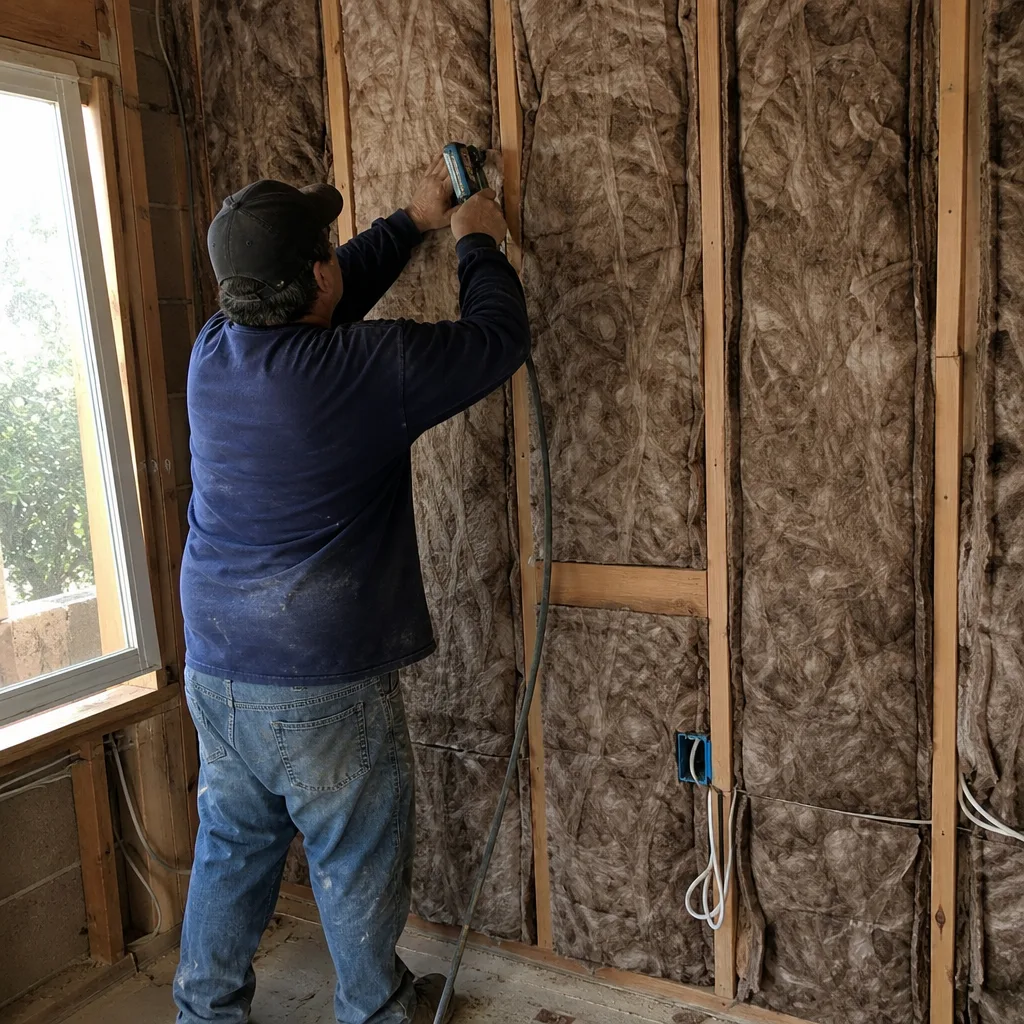
What Attic Cleaning Costs in Running Springs
Expect attic cleaning in Running Springs to run $600 to $1,400 for a typical 1,000-square-foot attic. Add $300 to $700 if wet insulation or rodent-contaminated material needs removal and bagging. We quote the full job in writing before we put on respirators and start working.

What happens when you call
- 1
A real person answersNo phone trees - you reach a local pro.
- 2
You get an upfront price rangeHonest numbers before anyone is dispatched.
- 3
A background-checked tech heads outLicensed & insured, dispatched right away.
- 4
You approve before work beginsNothing starts until you say go.
Trusted Brands We Service in Running Springs
We stock Owens Corning, Johns Manville, and Knauf products sized for Running Springs attics, so we’re not waiting on a supply house run down the mountain when your job is scheduled. Owens Corning R-30 and R-38 batts cover most of the freeze-thaw insulation needs here. Johns Manville blown-in fiberglass works well for topping up older loose-fill. For cabins with stubborn rooflines, Knauf batt options let us fit odd rafter bays tightly. We match the material to the job and the R-value target, not to whatever’s already on the truck. That’s how the Relay standard works.
Common Attic Insulation Problems We See in Running Springs Homes
- Ice damming at the eaves: Snow melts off the warm roof deck, refreezes at the cold eave edge, and backs up under the shingles. The meltwater soaks into compressed or missing insulation along the north-facing slope, and by spring the ceiling shows stains. We see this most often on Highway 18 cabins and homes above Arrowhead Highlands where snow sits for weeks.
- Baked-out south-facing rafters: At 6,000 feet, the summer sun punishes south roof planes. Attics without a radiant barrier reach extreme temperatures that cook batt insulation, reducing its effective R-value years before its rated lifespan.
- Blocked or undersized eave vents: Many 1960s and 1970s Running Springs cabins were built with minimal venting. Once pine needles and duff clog the eave openings, moisture has no escape. Insulation stays damp, and wood begins to rot.
- Compressed R-11 in older A-frames and cabins: The steep roof pitches on A-frame construction make original batts slide and compress over time. An R-11 batt that’s squashed to half its thickness delivers R-6 performance, and the upstairs rooms freeze during winter nights.
Pricing for Attic Insulation in Running Springs, CA
Most attic insulation jobs in Running Springs run between $900 and $2,400 depending on square footage, current R-value, access difficulty, and whether we’re adding ventilation or radiant barrier. Blown-in attic insulation for a 1,200-square-foot attic typically lands between $1,200 and $1,900. Batt insulation replacement on the same size attic runs $1,400 to $2,600 with tear-out included. Top-ups, where we blow new material over existing but serviceable insulation, run $700 to $1,300. Every quote is written and delivered before the first staple is set. Call (361) 315-4177 for a free, line-item estimate for your Running Springs home.
We Also Serve Cities Near Running Springs
Our crews regularly work up and down Highway 18 and the surrounding mountain and foothill communities. If you’re in Lake Arrowhead, Highland, Mentone, or Crestline, we can schedule your Attic Insulation job with the same written-price guarantee and live tracking. Running Springs is our focus, but the whole San Bernardino mountain corridor is our territory.
Serving Running Springs, CA - Our Local Coverage Area
We’re based in the Running Springs area and know this community well. Use the map below to see our service coverage - if you’re nearby, we can almost certainly help.
FAQs About Attic Insulation in Running Springs
Yes. Snow load and ice damming change how we approach Running Springs attic insulation. We prioritize air-sealing the attic floor to keep warm household air out of the roof deck, add vent baffles at the eaves, and use insulation with enough R-value to keep the roof deck cold and uniform. A cold roof sheds snow rather than melting it into ice dams. Call (361) 315-4177 for an exact recommendation for your roofline.
For Running Springs at 6,000 feet, we recommend R-38 to R-49 in the attic floor, which is higher than the R-30 minimum most low-elevation Inland Empire homes get. The colder winter temperatures and longer heating season justify the thicker insulation. For cathedral ceilings in A-frames, R-30 batts with vent baffles are the practical ceiling of what the rafter bays will hold.
Same day in most cases. We dispatch crews to Running Springs daily, so when a roof leak or ice dam leaves insulation soaked, we can usually have someone on site within hours, not days. Winter schedule fills fast after storms. Calling (361) 315-4177 early gets you on the board.
Yes, especially for Running Springs homes with south- or west-facing roof planes. High-altitude UV and summer heat hit harder than at lower elevations, and a radiant barrier drops attic temperatures by 20 to 30 degrees in the hottest months. It’s one of the few attic upgrades that pays back in both summer comfort and longer insulation life.
We replace it. Wet fiberglass or cellulose loses its R-value and never dries properly inside an attic cavity without active air movement. We pull the saturated material, treat the deck for mold, air-seal the penetrations, and install fresh insulation with proper venting so the same ice dam doesn’t come back next winter. The 365-Day Done Right Promise covers the workmanship in writing.
Running Springs attics face a combination of snow, ice, and high-altitude sun that demands insulation done right the first time. If your heating bills are climbing, your ceiling shows water stains, or your upstairs rooms won’t hold temperature, call Laurel Attic Insulation at (361) 315-4177. Chase Whitaker and our crew will give you a written price, a live arrival window, and photo proof of the completed work. The estimate is free, and the quote stands before any work begins.
Written by Chase Whitaker, Owner at Laurel Attic Insulation, serving Running Springs and the San Bernardino mountain communities.