
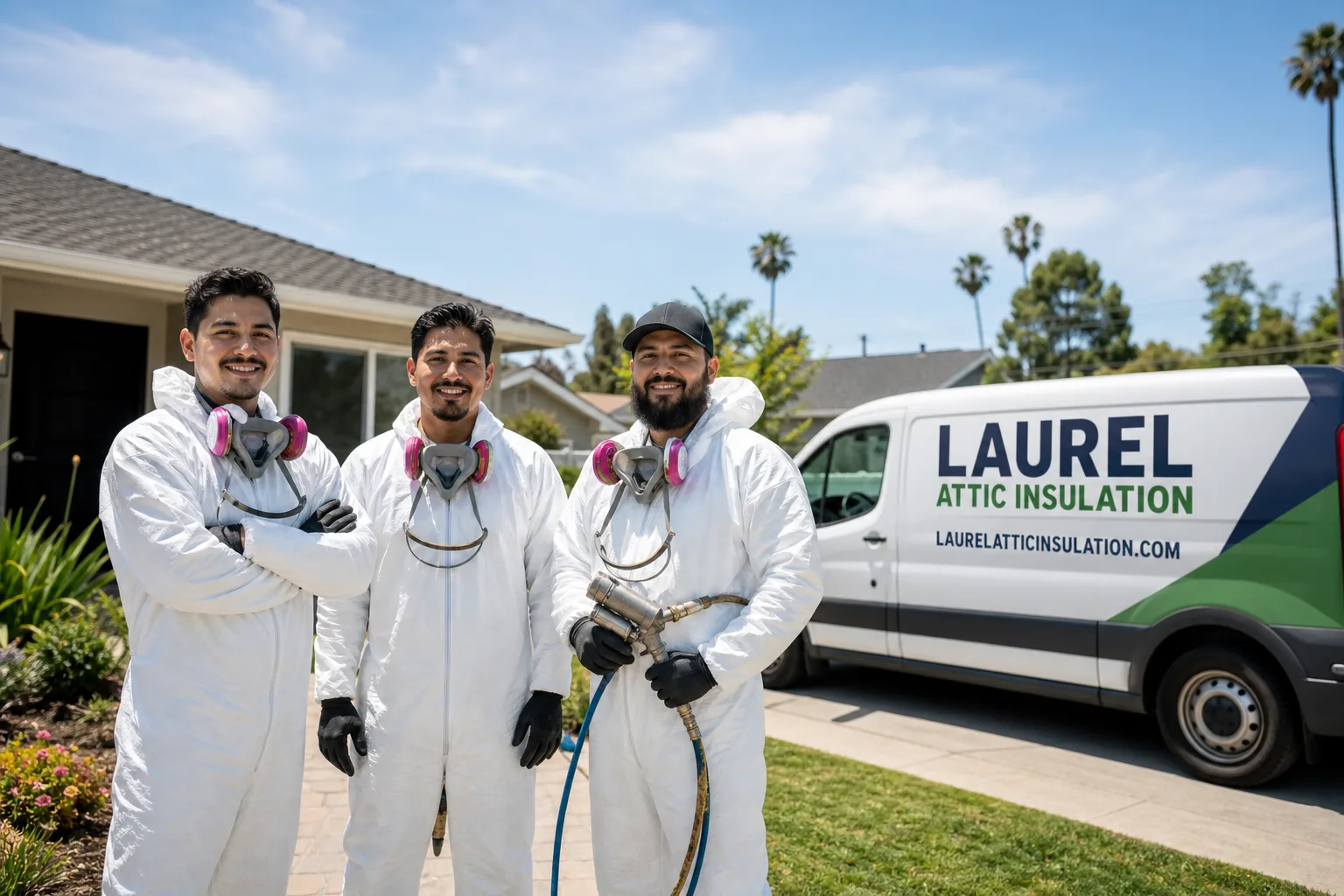
Fast, Reliable Attic Insulation Across Lake Los Angeles
If your Lake Los Angeles home was built in the 1980s or early 1990s and still has its original attic insulation, you’re likely paying for comfort you’re not getting. Attic Insulation in Lake Los Angeles isn’t a luxury upgrade here. It’s the single most effective fix for homes where attic temperatures swing from below freezing on January nights to over 150°F by July afternoons. Our crews know exactly what that does to fiberglass batts, and we can be at your door fast. Call (361) 315-4177 and we’ll give you a written price before anything starts.
We work throughout Lake Los Angeles, from the neighborhoods off 170th Street East to the newer homes near Avenue O and the parcels up toward the aqueduct. This is high-desert country, and the houses here were mostly framed before modern energy codes existed. That means under-insulated attics are the rule, not the exception. We fix that.
Why Laurel Attic Insulation Is Lake Los Angeles’s Preferred Attic Insulation Company
Lake Los Angeles homeowners call us because we answer. When your attic is running 150°F and your AC hasn’t cycled off since breakfast, you don’t want a voicemail. You want a live person, 24/7, who can schedule a crew with a real arrival time you can track on your phone. That’s how Laurel Attic Insulation works. Dispatch is coordinated from the Relay Home Co. Los Angeles office, and our local crews serve Lake Los Angeles directly.
We don’t do vague four-hour windows. Every technician who arrives at a Lake Los Angeles home is background-checked, uniformed, and tracked live through the Relay Visibility Guarantee. You see who’s coming, when they’ll arrive, and photo proof of every stage of the job. Before a single staple is set, you have a written price. After the work is done, you get a written guarantee on the insulation, delivered with a digital invoice you can pay from a link.
Chase Whitaker leads our team, and he’s built the operation around a simple idea: insulation work should be transparent from the first call to the final photo. If something isn’t right within 365 days, the Done Right Promise kicks in. We make it right at no charge. That’s the standard every Lake Los Angeles job gets.
Radiant Barrier in Lake Los Angeles
Radiant Barrier in Lake Los Angeles is not optional if your goal is an attic that doesn’t bake the rest of the house. A radiant barrier is a reflective material, typically installed on the underside of roof rafters, that blocks radiant heat from the sun from transferring through the roof deck. Here in the Antelope Valley, where summer sun hits flat and hard, an uncoated roof sheathing can push attic air past 150°F. Bulk insulation slows conductive and convective heat, but it can’t stop radiant heat. Only a radiant barrier does that.
How a Radiant Barrier Fits With Your Existing Insulation
Think of it this way: your blown-in or batt insulation is the thermal blanket. Radiant barrier is the shade awning. Together, they cut attic temperature meaningfully, which means your AC doesn’t have to fight a 150°F heat reservoir sitting right above your ceiling. For a typical Lake Los Angeles ranch, adding radiant barrier and verifying your attic ventilation can drop peak attic temperatures by 20 to 30 degrees. That’s a real reduction in cooling load.
What a Radiant Barrier Costs Here
For a standard Lake Los Angeles attic, expect a radiant barrier installation to run $900 to $1,800 depending on attic size, roof pitch, and whether we’re also air-sealing ceiling penetrations at the same time. We’ll write the number down before we start, and that number is the number. No door-step adjustments.
Attic Cleaning Services in Lake Los Angeles
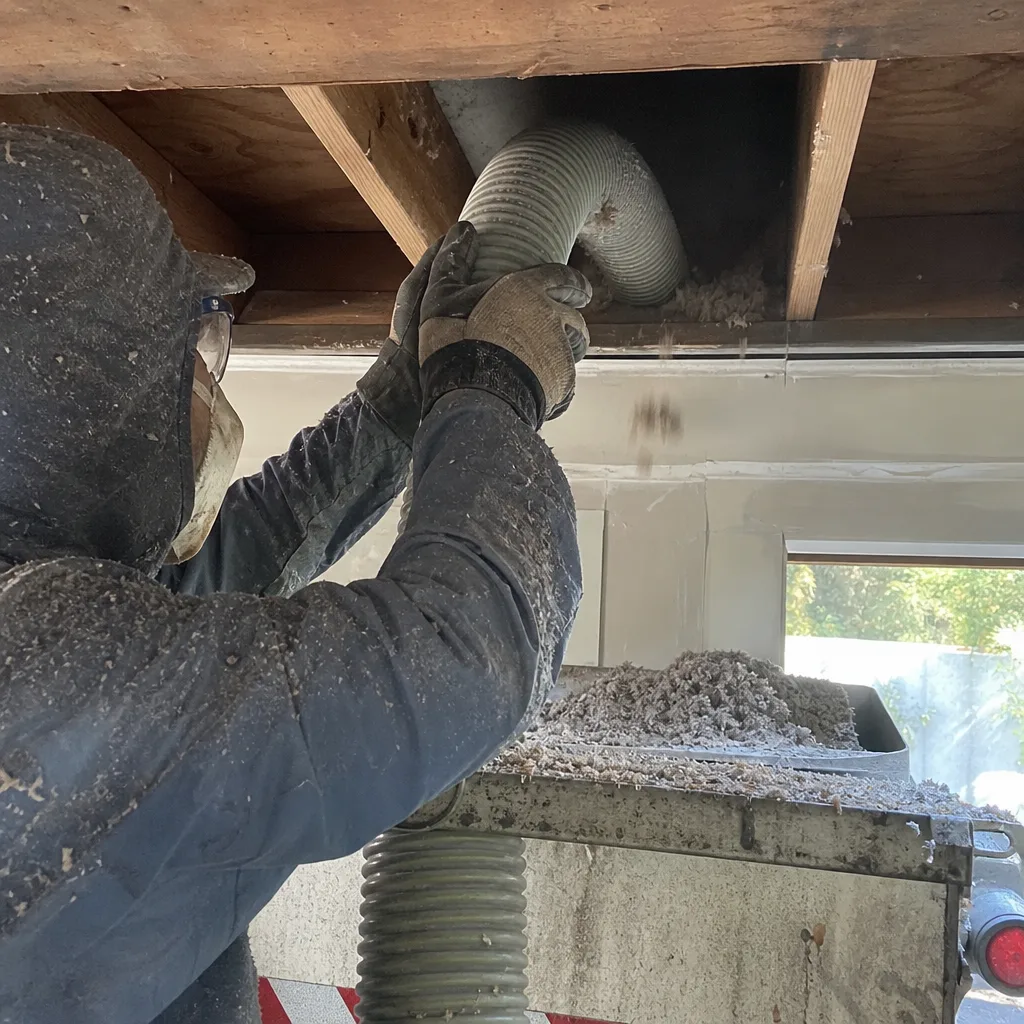
Attic Cleaning Services in Lake Los Angeles often matter more than the insulation replacement itself. High-desert attics collect dust, packrat droppings, rodent tunnels, old compressed insulation, and sometimes the residue of failed AC ductwork. None of that belongs in the air your family breathes, and none of it should be buried under new insulation. Blowing new fiberglass over contaminated old batts just seals the problem in.
Removal Before Renewal
We remove the old material, clean the attic deck where needed, and inspect for rodent activity. Packrats are common around Lake Los Angeles, and their tunnels through batt insulation crush the loft, create air channels, and leave behind waste. Insulation that’s been tunneled through has lost most of its R-value. You can’t top it up and call it good. Our team hauls it all out and starts with a clean attic.
Air-Sealing and Ventilation Prep
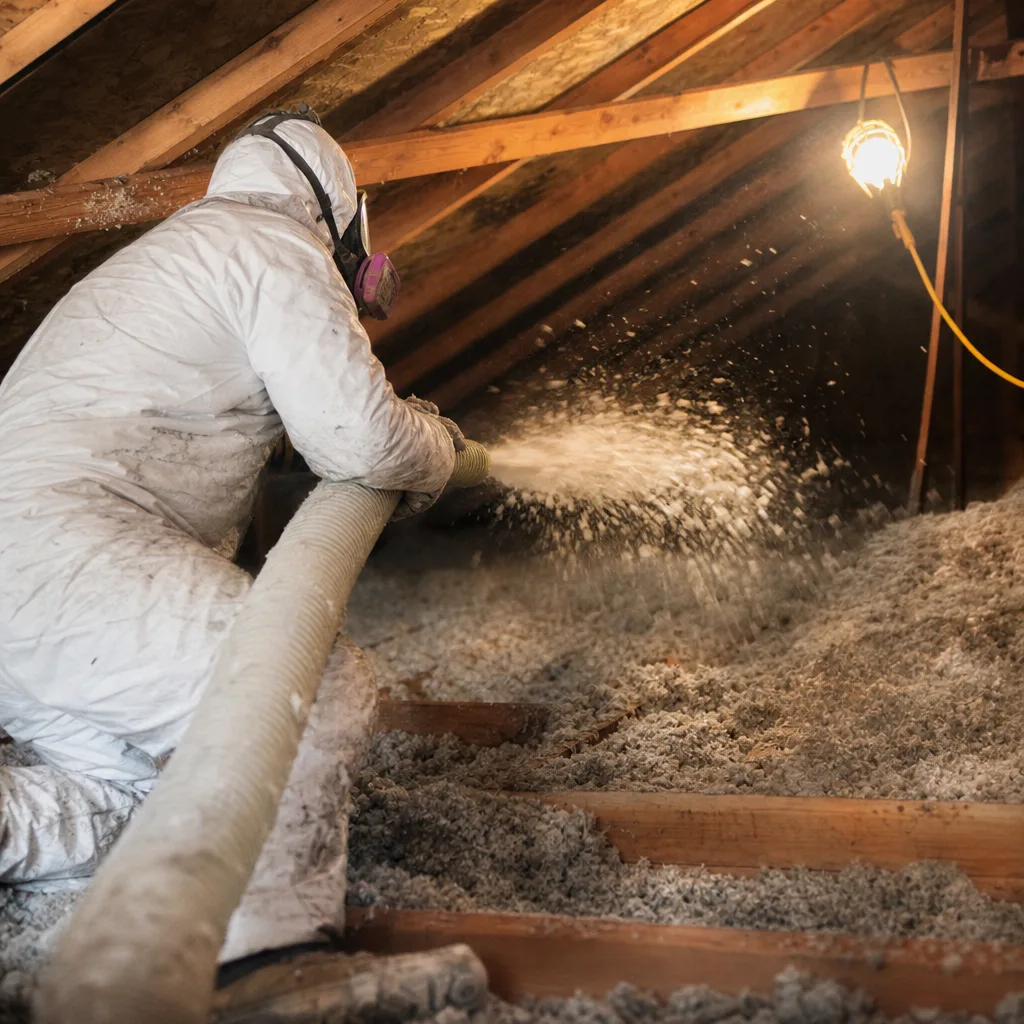
While the attic is open, we check recessed light housings, ceiling penetrations, and attic access hatches for air bypasses. In a Lake Los Angeles tract home, these gaps allow conditioned air to escape into the attic all year. Sealing them with foam or caulk before adding new insulation is one of the highest-return steps in the whole job. A clean, sealed, properly vented attic makes the new insulation actually perform at its rated R-value.
What happens when you call
- 1
A real person answersNo phone trees - you reach a local pro.
- 2
You get an upfront price rangeHonest numbers before anyone is dispatched.
- 3
A background-checked tech heads outLicensed & insured, dispatched right away.
- 4
You approve before work beginsNothing starts until you say go.
Trusted Brands We Service in Lake Los Angeles
We don’t stock whatever is on the truck. Laurel Attic Insulation carries materials from eight manufacturers, and for Lake Los Angeles homes we most often recommend Owens Corning fiberglass for blown-in work, Rockwool batts for homes needing superior fire resistance and sound control, and CertainTeed for accessible price-performance. Johns Manville and Knauf round out the fiberglass options when we’re matching an existing envelope spec. Each material is matched to the job, the attic configuration, and the specific Lake Los Angeles conditions. We keep enough local inventory staged for fast turnaround, so a Monday call doesn’t become a Thursday start.
Common Attic Insulation Problems We See in Lake Los Angeles Homes
- Compressed R-11 batts from the 1980s. Most Lake Los Angeles tract homes were built with minimal attic insulation, and years of 150°F+ heat have settled and compressed those batts. Rated R-11 new, they’re often performing at R-4 or worse now. That’s a huge energy drain.
- Rodent tunnels through batt insulation. Packrats are a fact of life in the high desert. They chew through fiberglass batts, create air channels, and leave waste behind. Any insulation with tunnel damage needs removal and replacement, not a top-up.
- Radiant heat gain through uncoated roof sheathing. Even with adequate insulation, the roof deck itself radiates heat into the attic. Without a radiant barrier, that heat soaks into the insulation from above and slowly pushes back into the living space.
- Open bypasses around recessed lights and access hatches. The small gaps where wiring and fixtures penetrate the ceiling are direct channels for hot attic air to leak into the house in summer, and for warm air to escape in winter. Sealing them is a prerequisite for efficiency.
Pricing for Attic Insulation in Lake Los Angeles, CA
Most attic insulation jobs in Lake Los Angeles run between $900 and $2,400 depending on attic square footage, removal needs, R-value target, and whether we’re adding a radiant barrier. A blown-in fiberglass top-up over a small single-story ranch typically falls in the $900 to $1,400 range. Full removal, cleaning, air-sealing, and re-insulating a larger attic to R-49 usually lands between $1,800 and $2,400. Radiant barrier is additional, roughly $900 to $1,800 as covered above. We give you a written price before work starts, and estimates are free. Call (361) 315-4177 and we’ll schedule a time that works.
Our Attic Insulation team has handled every attic configuration common in Lake Los Angeles, from low-slope ranch framing to trussed two-story layouts. The price we quote is the price you pay, backed in writing.
We Also Serve Cities Near Lake Los Angeles
If you’re outside Lake Los Angeles proper, we also serve Attic Insulation in Lake Los Angeles adjacent communities and nearby metro areas including Los Angeles, San Diego, San Jose, and San Francisco. Give us a call and we’ll confirm coverage for your specific street and schedule a time on the same call.
Serving Lake Los Angeles, CA - Our Local Coverage Area
We’re based in the Lake Los Angeles area and know this community well. Use the map below to see our service coverage - if you’re nearby, we can almost certainly help.
FAQs About Attic Insulation in Lake Los Angeles
Yes, in most cases. Lake Los Angeles sees summer attic temperatures that routinely exceed 150°F, and bulk insulation alone cannot stop radiant heat from the roof deck. A radiant barrier blocks that heat transfer at the source. If your attic has uncoated roof sheathing and you’re already planning an insulation upgrade, adding a radiant barrier is the single most effective add-on you can make. We’ll include it in your written quote so you can decide with real numbers in front of you. Call (361) 315-4177 to get your exact figure.
Packrats and field mice are common throughout the high desert around Lake Los Angeles, and attics with fiberglass batts give them a protected place to nest. The tunnels they chew through batt insulation crush the loft and create air channels that bypass the thermal barrier. That means your insulation is not doing its job, even if it looks thick from the access hatch. The fix is removal, cleaning, and replacement, often with blown-in fiberglass that leaves less nesting structure. We see this weekly in Lake Los Angeles attics.
Usually same day or next morning, depending on your specific location in Lake Los Angeles and the job scope. Calls are answered by a live person 24/7, and once you’re on the schedule you get a trackable arrival time, not a window. If you’re off 170th Street East, near Avenue O, or anywhere else in the community, we can typically be on-site within 24 hours. Call (361) 315-4177 for the soonest opening.
In most Lake Los Angeles homes built before 1995, replacement is the honest answer. Original R-11 or R-13 batts in old tract homes have compressed, sagged, and often been damaged by rodents. Topping them up buries the problem. Full removal and replacement to R-49 is the standard we recommend for high-desert attics. If your insulation is newer and in good shape, a simple top-up may be enough. We’ll tell you which one applies after a 15-minute attic inspection, and we’ll show you photos either way.
The 40-degree diurnal swing between winter nights and summer afternoons in Lake Los Angeles means your insulation has to perform in both directions: keeping heat out in summer and heat in during winter. Fiberglass blown-in at R-49 performs well across that range, but radiant barrier becomes critical because summer attic heat here is primarily radiant, not convective. We select materials for the full annual cycle, not just peak summer. The combination of air-sealing, R-49 blown-in fiberglass, and radiant barrier is what works in this specific climate.
Ready to get your Lake Los Angeles attic fixed? Call (361) 315-4177 for a free estimate and a written price before any work begins. We answer live, 24/7, and we’ll have a trackable crew at your door fast.
Written by Chase Whitaker, Owner at Laurel Attic Insulation, serving Lake Los Angeles and the surrounding Antelope Valley.