
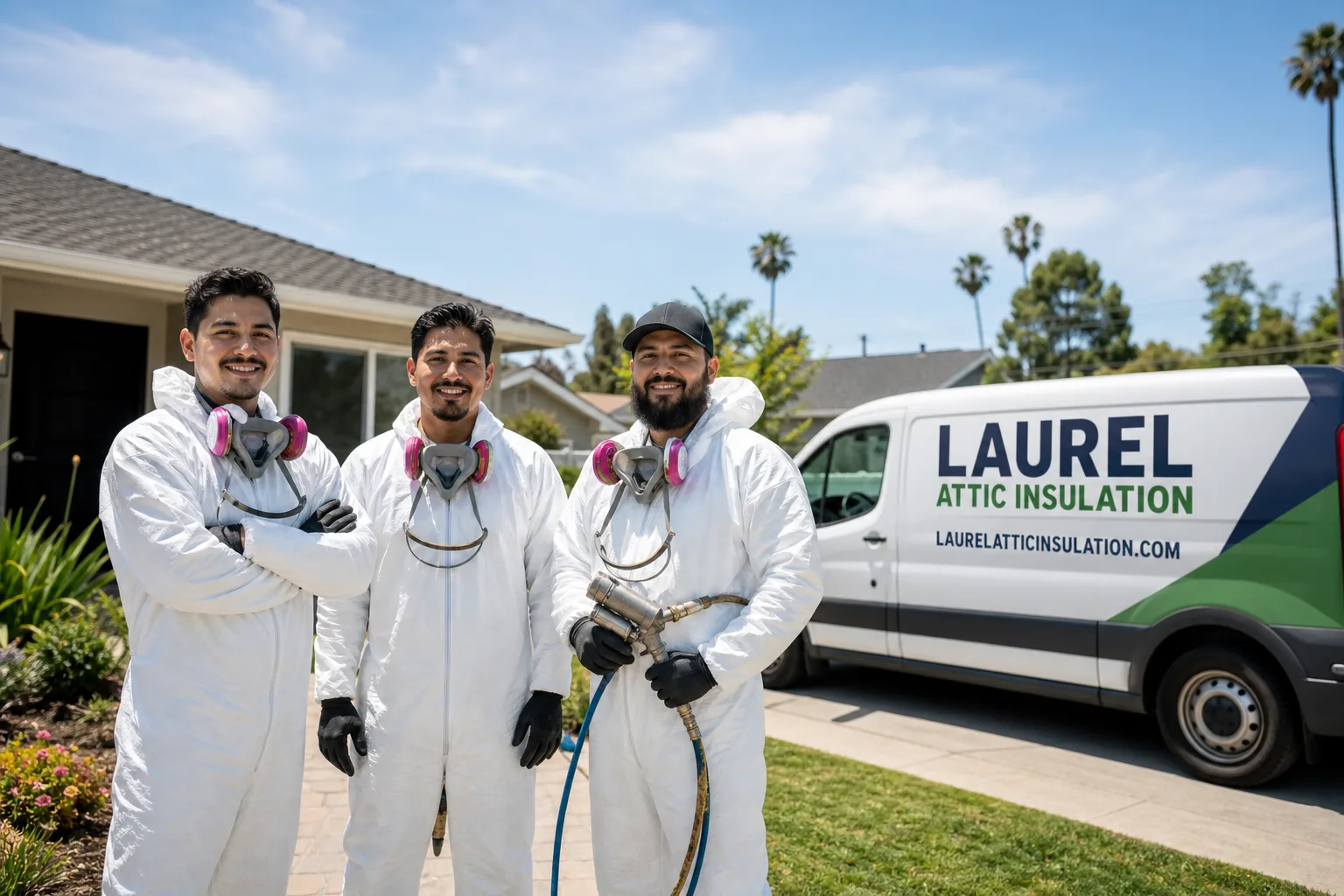
Fast, Reliable Attic Insulation Across Good Hope
Attic insulation in Good Hope usually comes down to one of two jobs: removal of old, compromised material or installation of new insulation rated properly for our inland heat. Most homes here were built before 1990, which means attics are typically holding settled fiberglass batts that have lost much of their original R-value. We get calls from Good Hope homeowners every week in summer describing the same thing: the AC runs constantly, upstairs rooms won’t cool, and the energy bill keeps climbing. The fix almost always starts with a look inside the attic. If you’re dealing with that right now, call (361) 315-4177 and we’ll schedule a walkthrough, no pressure and no charge for the estimate.
Why Laurel Attic Insulation Is Good Hope’s Preferred Attic Insulation Company
Laurel Attic Insulation has been doing attic work since 2003 as part of the Relay Home Co. family, and the Good Hope homeowners we work with tend to mention the same things: we show up when we say we will, we hand over a written price before anything starts, and we send photo proof of the work when it’s done. When your attic hits 150°F in July, you don’t want a contractor who disappears for a week. Our crews coordinate dispatch from the Inland Empire office and serve Good Hope directly, so response times are measured in days, not weeks.
Every Good Hope job runs on the Relay Visibility Guarantee. You book, you get a live arrival time instead of a four-hour window, and you can track the tech the way you’d track a delivery. Chase Whitaker, who leads Laurel Attic Insulation, set up our systems so that homeowners always know where their project stands: written price first, written guarantee on the work, and before-and-after photos sent to your phone. The 365-Day Done Right Promise means if something isn’t right within a year, we come back and make it right. No charge, no argument.
We also answer the phone. Live person, 24/7. Not a voicemail queue. When a Good Hope homeowner calls at 9pm because a raccoon tore through their attic and insulation is falling into the hallway, someone picks up and starts coordinating help.
Attic Mold Removal in Good Hope
Attic mold removal in Good Hope starts with identifying why moisture is trapped in the attic, not just killing the visible mold. In homes off Hwy 74 and throughout the Perris Valley area, we typically find the same culprits: bathroom exhaust fans venting into the attic instead of through the roof, blocked soffit vents, or rodent activity that introduced moisture and organic material into the insulation. In Good Hope’s summer heat, that trapped moisture bakes the attic into a mold incubator.
The job involves removing contaminated insulation, treating the affected roof decking and framing, addressing the moisture source, and then installing fresh insulation. In Good Hope, mold remediation inside an attic with blown-in or batt insulation removal typically runs $1,200 to $3,800 depending on square footage and how far the mold has spread across the roof deck. If the mold is caught early and contained to one section, it’s on the lower end. If it’s spread wall-to-wall, expect the higher end.
What We Treat and What We Remove
We treat surface mold on framing and roof decking with an antimicrobial, then seal it once dry. Insulation that has mold on or in it gets removed and replaced. You can’t reliably “clean” moldy fiberglass or cellulose – the spores are embedded. We always remove it.
Ventilation Before Insulation
Blowing new insulation over a mold problem without fixing airflow is a waste of money. Before any new material goes in, we check that soffit vents are clear and baffles are in place so air moves from the eaves up to the ridge. Good Hope attics need that airflow year-round, but especially from June through September when roof surface temps can exceed 160°F.
Attic Insulation Removal in Good Hope
Attic insulation removal in Good Hope is the step most homeowners skip, and it’s often the most important one. After 30 to 50 years, fiberglass batts in pre-1990 Good Hope homes have settled, compressed, been tunneled through by rodents, and in many cases absorbed dust and odors that no amount of new insulation on top can fix. Our removal process starts with a full containment setup, then we extract the old material, sanitize the attic floor, and prepare the space for new insulation.
Removal costs in Good Hope generally run $1 to $2.50 per square foot for standard fiberglass or cellulose removal. For a typical 1,200-square-foot attic, that puts most jobs between $1,200 and $3,000 before new insulation goes in. If there’s rodent contamination or deep soiling, the price can push toward the higher end because of the extra sanitation steps and the time involved. But the alternative – blowing new insulation over the old – means sealing in the smell, the allergens, and the compromised performance.
Same-Day Removal and Replacement
We coordinate removal and replacement in the same visit whenever possible. Good Hope homeowners often call because they’ve already had a pest control company out and they want the aftermath cleaned up, not just covered up. Our team can typically remove old insulation, prep the attic, and install new material within one to two working days depending on attic size.
Rodent Damage and Contamination
Rodent tunnels through fiberglass batts create air channels that let conditioned air leak straight out of your home. They also leave behind waste that dries and circulates through your ductwork. When we remove insulation from a Good Hope attic that’s had rodents, we sanitize with an enzyme treatment before any new insulation touches the deck. That step is non-negotiable on our crew.
Trusted Brands We Service in Good Hope
We install and service materials from eight leading manufacturers, and for Good Hope attics we most often recommend Owens Corning fiberglass, Johns Manville batts, or GreenFiber blown-in cellulose depending on the home’s construction and budget. We stock at local supply access points near the Perris Valley so turnaround is fast – there’s no week-long wait for materials to ship in. Owens Corning is our go-to for R-38 blow-in on Good Hope ranch homes because it holds its loft well. GreenFiber cellulose works well in older planked attics where irregular spacing leaves gaps that batts can’t fill cleanly. Johns Manville batts suit crawlspace-adjacent attic sections where blown-in isn’t practical. We match the material to the job, not to whatever is on the truck.
Common Attic Insulation Problems We See in Good Hope Homes
- Settled fiberglass batts in pre-1990 homes. Original R-19 or R-30 batts compress over decades to R-11 or worse. We see this on nearly every Good Hope attic built before 1990, especially ranches off Hwy 74 and homes near the older streets around Perris Boulevard. Restoring R-value is the core of the fix.
- Rodent and insect tunneling. Rats, mice, and roof rats tunnel through older batts, leaving air channels that bypass insulation entirely. The tunnels also spread attic odors into hallways and bedrooms. Removal and replacement is the only real fix.
- Summer heat degrading radiant barriers. Attic temps over 150°F cause older radiant barriers to delaminate and lose reflectivity. Homes without adequate ceiling insulation then radiate that heat straight through into living spaces. We see this pattern across Good Hope’s inland climate each summer.
- Blocked or missing baffles. Many Good Hope attics were built without proper baffles at the eaves, and soffit vents have since been painted over or blocked by old insulation. That chokes airflow, traps heat and moisture, and accelerates everything above.
Pricing for Attic Insulation in Good Hope, CA
Most full attic insulation jobs in Good Hope run between $900 and $4,800 depending on square footage, R-value target, and whether removal is needed first. Blown-in fiberglass for a standard 1,200-square-foot attic at R-38 typically lands between $1,500 and $2,600. Batt insulation runs $1,800 to $3,400 for a similar footprint. Top-ups are cheaper – generally $700 to $1,400 if the existing insulation is dry, uncontaminated, and not compressed. Full removal and replacement with R-38 on a ranch with rodent damage usually falls between $3,500 and $6,000. We write the price before any work starts and it doesn’t change at the door. Call (361) 315-4177 for a free estimate – we’ll give you a real number, not a range that shifts later.
We Also Serve Cities Near Good Hope
Our crews regularly handle Attic Insulation jobs throughout Riverside County and beyond. If you’re in Los Angeles, San Diego, San Jose, or San Francisco, we can coordinate service through the same booking system and written-pricing guarantee. And for everything specific to this area, our Attic Insulation in Good Hope page keeps local details fresh.
Serving Good Hope, CA - Our Local Coverage Area
We’re based in the Good Hope area and know this community well. Use the map below to see our service coverage - if you’re nearby, we can almost certainly help.
FAQs About Attic Insulation in Good Hope
We can typically get a technician to a Good Hope home within 24 to 48 hours, and same-day availability is common when you call before noon. For urgent jobs like a rodent-damaged attic or mold that’s spreading, call (361) 315-4177 and we’ll prioritize scheduling. Removal jobs in Good Hope are usually completed start to finish in one to two working days.
Because most Good Hope homes were built before 1990 and the original batts have settled, compressed, and often been tunneled by rodents. Blowing new insulation over that seals in the contamination and leaves the air channels intact. In Good Hope’s 150°F+ summer attics, that means your new insulation still underperforms. Removal first is the only way to restore actual R-value.
We recommend R-38 to R-49 for attics in Good Hope, which matches the DOE guidance for our inland Southern California climate zone. Most Good Hope ranches we work on currently have R-11 to R-19 in the attic, so the difference after an upgrade is immediate – homeowners usually report the AC cycling off for the first time in years. Call (361) 315-4177 and we’ll check your current attic insulation level at no charge.
No, and you shouldn’t try to. Mold that’s embedded in fiberglass or cellulose cannot be reliably cleaned, so the insulation comes out and gets replaced. What we do treat is the framing and roof decking underneath, then we fix the moisture source – usually a bathroom fan venting into the attic or blocked soffit vents. The mold won’t come back if the airflow is right.
Yes, that’s most of what we do in Good Hope. Older homes with original fiberglass batts are our bread and butter. We were called to a 1970s ranch on a cul-de-sac off Hwy 74 in Good Hope where the homeowner noticed their AC running nonstop and a musty smell in the hallway. Our tech found settled R-11 batts with rodent tunneling and early mold on the north roof deck. We removed the old insulation, treated the mold, and blew in Owens Corning R-38 fiberglass. The homeowner called two days later to say the house finally held temperature and the smell was gone.
Good Hope’s inland location means attics here routinely hit 150°F or higher from June through September, and homes built before 1990 simply weren’t insulated for that sustained heat load. The original batts were often R-19 at best, and three decades of settling leave them functioning like R-11 or less. That’s why attic work in Good Hope so often starts with removal, and why we push ventilation and baffle prep before any new material goes down. Laurel stays green all year, and that’s the idea behind the name – your home’s comfort should hold steady through Good Hope summers too.
Ready to get started? Call (361) 315-4177 for a free estimate. We’ll send a technician to your Good Hope home, walk the attic with you, and hand you a written price before any work begins. No pressure, no surprises, no phone tag.
Written by Chase Whitaker, Owner at Laurel Attic Insulation, serving Good Hope since 2003.