
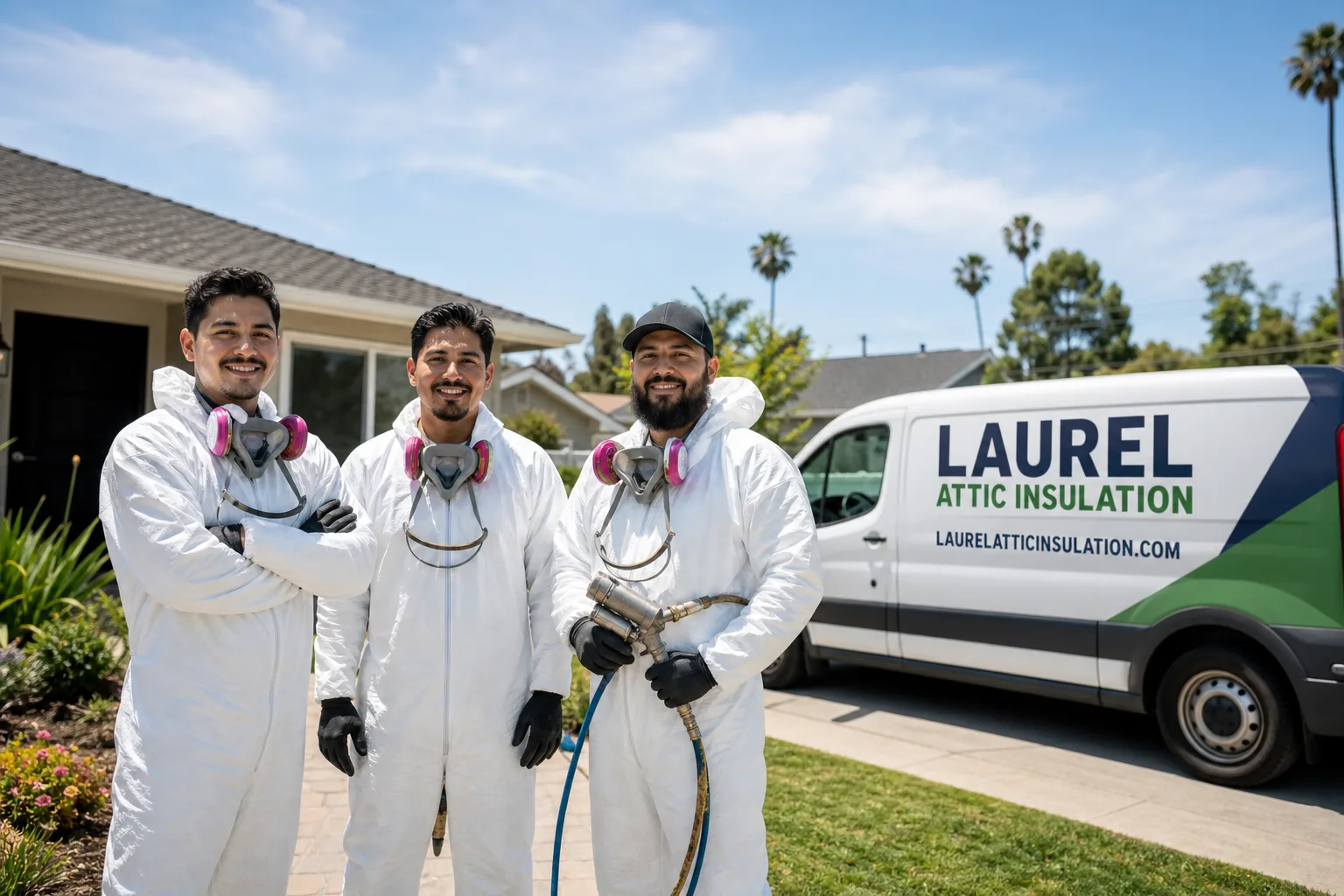
Fast, Reliable Attic Insulation Across Valley Center
Most attic insulation jobs in Valley Center run $900 – $2,400 depending on square footage, existing R-value, and whether you need ventilation or radiant barrier work alongside the insulation. We get crews to Valley Center homes same-day in most cases, with a written price before any work starts. If your upstairs rooms won’t hold temperature or your summer SDG&E bill has climbed, the attic is usually where the problem lives. Call (361) 315-4177 and we’ll give you a straight answer before we ever set foot in your attic.
Why Laurel Attic Insulation Is Valley Center’s Preferred Attic Insulation Company
Valley Center homeowners call us because we treat their attic like the specific problem it is, not a one-size-fits-all square footage quote. Chase Whitaker leads our team, and he’s the person who walks you through what we found, why it failed, and what actually needs to happen next. That matters when you’re deciding between a $900 top-up and a $2,400 full replacement.
We show up at a live, trackable time, not a four-hour window. Our techs are background-checked and uniformed, and they photograph every step: the compressed batts they pulled out, the air leaks they sealed, the final R-value they blew in. You get those photos on your phone, with a digital invoice you can pay from the link. No clipboard mystery, no “trust me.”
Every job carries our 365-Day Done Right Promise in writing. If the insulation isn’t performing, we come back and make it right. If a repair fails within the year, the second visit is free. That’s the deal, every time, on every Valley Center job.
We’re part of the Relay Home Co. family, founded in 2003. We built our whole process around one idea: you should see everything a contractor does, before, during, and after the work. That’s the Relay Visibility Guarantee. Dispatch is coordinated from our San Diego office; crews serve Valley Center locally and know the roads, the heat, and the housing stock.
Attic Ventilation in Valley Center
Attic Ventilation in Valley Center is the difference between an attic that stays under 120°F in August and one that hits 145°F and bakes your insulation, your roofing, and your upstairs rooms. Most Valley Center attics we inspect have inadequate eave intake or ridge exhaust, which means heat and moisture get trapped and slowly degrade everything up there. A balanced ventilation setup in Valley Center typically runs $400 – $900 depending on the number of soffit baffles, the type of exhaust (static, turbine, or solar-powered), and whether we’re retrofitting existing framing.
What a Ventilation Retrofit Involves
We start by measuring net free vent area against the attic’s square footage. Then we install baffles at the eave intakes so blown-in insulation doesn’t block airflow, and confirm the exhaust path actually pulls hot air out. On homes off Valley Center Road or Cole Grade Road, we commonly find the original builder put in one gable vent and called it done. That’s not enough for this climate.
When Ventilation Alone Fixes the Problem
If your insulation is intact but your upstairs rooms still run 8 – 10°F hotter than downstairs, the problem is often ventilation, not R-value. Getting the airflow right is cheaper than re-insulating and sometimes eliminates the need for a full attic insulation replacement entirely. We’ll tell you honestly if your insulation is fine and your vents are the culprit. We have no incentive to sell what you don’t need.
Radiant Barrier in Valley Center
Radiant Barrier in Valley Center works differently than insulation: instead of slowing heat conduction through your ceiling, it reflects radiant heat before it ever reaches the insulation below. In a Valley Center summer, where attic deck temperatures climb past 130°F, a properly installed radiant barrier can cut attic temps by 20 – 30°F. For most Valley Center homes, a radiant barrier installation runs $1,200 – $2,800 depending on attic square footage and whether we’re stapling to the rafters or laying it over existing insulation.
Do Valley Center Homes Actually Benefit
Yes, more than most San Diego County homes. Valley Center sits east of the marine layer, so you don’t get the afternoon ocean breeze that keeps coastal attics cooler. Your attic gets hammered by direct sun from mid-morning to sunset. A radiant barrier pays off fastest in homes with ductwork running through the attic, because cooler attic air means your AC isn’t fighting a 140°F duct environment.
Radiant Barrier vs. More Insulation
If you already have R-30 or better but your attic still hits extreme temperatures, adding more blown-in insulation does little. The heat is entering as radiant energy, not conducting through the ceiling. That’s the case where we recommend a radiant barrier first. If your insulation is below R-19 or badly settled, we’ll tell you to fix that first. Most Valley Center homes need both eventually, but the order matters.
Trusted Brands We Service in Valley Center
We stock and install materials from Owens Corning, Rockwool, and Johns Manville, matched to the job rather than whatever is on the truck. For Valley Center’s extreme heat cycling, we lean on Owens Corning PINK Fiberglas for blown-in loose-fill because it resists settling better than cheaper alternatives in this sandy, decomposed-granite soil country. Rockwool’s mineral wool batts handle moisture well and don’t slump the way fiberglass can after years of 130°F heat. Johns Manville offers a solid mid-range option when budget drives the decision. We keep common baffles, sealants, and ventilation components on our crews’ trucks so we’re not making a second trip to a supplier mid-job. That matters when it’s 95°F and your upstairs is roasting.
Common Attic Insulation Problems We See in Valley Center Homes
- Compressed and sagging fiberglass batts. Valley Center’s 130°F+ summer attic heat breaks down the binder in fiberglass over time, and we regularly find R-19 batts performing closer to R-11 or worse. Homeowners near Woods Valley Road and Lake Wohlford Road call us thinking they need a new AC unit when the real problem is insulation that died quietly over a decade of heat cycling.
- Loose-fill insulation drifting and settling. Valley Center sits on deep sandy loam and decomposed granite, and many attics have slightly uneven floors. Loose-fill blown-in insulation migrates to the low side, leaving thin patches and hot ceiling zones directly above the rooms you care about. We commonly find 30 – 50% R-value loss in older homes around the Cole Grade Road and Valley Center Road corridors.
- Inadequate eave intake or ridge exhaust. Most 1980s and 1990s tract homes in Valley Center were built with marginal ventilation. When we inspect, we typically find soffit vents blocked by insulation or absent entirely. That trapped heat bakes the underside of your roof deck and accelerates shingle failure, on top of roasting your living space.
- Air leaks at top plates and can lights. Heat, dust, and decomposed granite fines move through unsealed top plates and recessed light housings. In Valley Center’s dry, dusty environment, this means your attic isn’t just hot, it’s actively leaking dusty air into your home every time the wind picks up. Air-sealing before adding insulation is the step most contractors skip, and it’s the step that makes the biggest comfort difference.
Pricing for Attic Insulation in Valley Center, CA
A blown-in attic insulation top-up in Valley Center runs $900 – $1,400 for a standard 1,200 – 1,800 square foot attic, depending on how much R-value you’re adding. A full attic batt insulation replacement with air sealing runs $1,800 – $2,400. Radiant barrier adds $1,200 – $2,800 depending on square footage. Attic ventilation retrofits run $400 – $900. These aren’t ballpark guesses; they’re what we actually quote on Valley Center jobs. The biggest cost drivers are attic size, existing R-value, access difficulty, and whether we’re air-sealing first. Every quote includes a written price before work starts, photo documentation, and the 365-Day Done Right Promise. Estimates are free. Call (361) 315-4177 and we’ll give you a number, not a speech.
We Also Serve Cities Near Valley Center
Our Attic Insulation crews serve homes throughout the Valley Center area, and we regularly run jobs in Escondido, San Marcos, Vista, and Fallbrook. If you’re in one of those communities, you get the same written price, live arrival tracking, and photo proof of every step. For more on what we do locally, see our Attic Insulation in Valley Center page. Call us and we’ll tell you exactly when we can be there.
Serving Valley Center, CA - Our Local Coverage Area
We’re based in the Valley Center area and know this community well. Use the map below to see our service coverage - if you’re nearby, we can almost certainly help.
FAQs About Attic Insulation in Valley Center
Because Valley Center’s inland heat cycling is brutal on insulation. Summer attic temps above 130°F break down fiberglass binders, compress batts, and cause loose-fill to settle, especially on the sandy decomposed-granite soils common in this area. What was R-38 a decade ago may be performing at R-19 or lower. The fix is usually a top-up or replacement with a settling-resistant material like Owens Corning PINK Fiberglas, plus air-sealing so the new insulation actually does its job. Call (361) 315-4177 for a free inspection and an honest answer about whether you need a top-up or a full replacement.
If your attic already has R-30 or more but still hits 130°F+, a radiant barrier is the better investment. More blown-in insulation slows heat conduction, but it does nothing to block the radiant heat that’s baking your attic from the roof deck down. In Valley Center, where the sun pounds your roof all afternoon with no marine layer relief, a radiant barrier typically drops attic temps by 20 – 30°F. We’ll inspect and tell you which problem you actually have. Estimates are free.
Most Valley Center calls, we can have a technician at your home same-day or next-day, with a live arrival time you can track from your phone. We don’t do vague four-hour windows. Call (361) 315-4177 and we’ll tell you exactly when we can be there and what the job will cost before we arrive.
Often it’s both, but in different ways. If your attic insulation is compressed, settled, or below R-19, heat conducts straight through your ceiling and your AC fights it all day. If your insulation is adequate but your eave intake and ridge exhaust are blocked or missing, trapped heat radiates down through the ceiling regardless. In Valley Center, we typically find both problems in the same attic. The inspection tells us which fix gives you the most comfort per dollar. Call (361) 315-4177 and we’ll diagnose it honestly.
We install Owens Corning, Rockwool, Johns Manville, and Knauf products, selected based on your attic’s specific failure pattern and your budget. For Valley Center’s heat and settling-prone soils, we most often recommend Owens Corning blown-in loose-fill for its settling resistance, or Rockwool batts where moisture and heat cycling are the primary concerns. We stock common materials on our trucks so we’re not making mid-job supply runs. Call (361) 315-4177 for a written quote and a material recommendation tailored to your attic.
We were called to a home off Cole Grade Road where the homeowner’s summer electric bills had jumped and the upstairs bedrooms wouldn’t cool. Our tech found the original R-19 batts had compressed and pulled away from the joists under years of heat cycling. We air-sealed the top plates and can lights, blew in Owens Corning PINK Fiberglas to R-38, and added attic ventilation baffles at the eave intakes. The customer reported their upstairs thermostat finally holding setpoint the following week. That’s the job we do in Valley Center: find what actually failed, fix it, and document it. If your upstairs is hot and your bills are climbing, call (361) 315-4177 and we’ll send someone who knows what to look for.
Written by Chase Whitaker, Owner at Laurel Attic Insulation, serving Valley Center as part of the Relay Home Co. family since 2003.