
Fast, Reliable Attic Insulation Across Rodeo
In Rodeo, attic insulation isn’t a set-and-forget job. Your attic hits 140°F or more from June through October, and if the insulation up there was installed a decade ago, it’s already breaking down. Laurel Attic Insulation handles attic work here every week, from the older homes off Parker Avenue to the newer builds near the waterfront. We’re the only attic insulation outfit in the area that pairs Owens Corning, Rockwool, and CertainTeed materials with live arrival tracking, written pricing before any work starts, and photo proof when the job’s done. Call (361) 315-4177 and you’ll reach a person, not a voicemail queue.
Why Laurel Attic Insulation Is Rodeo’s Preferred Attic Insulation Company
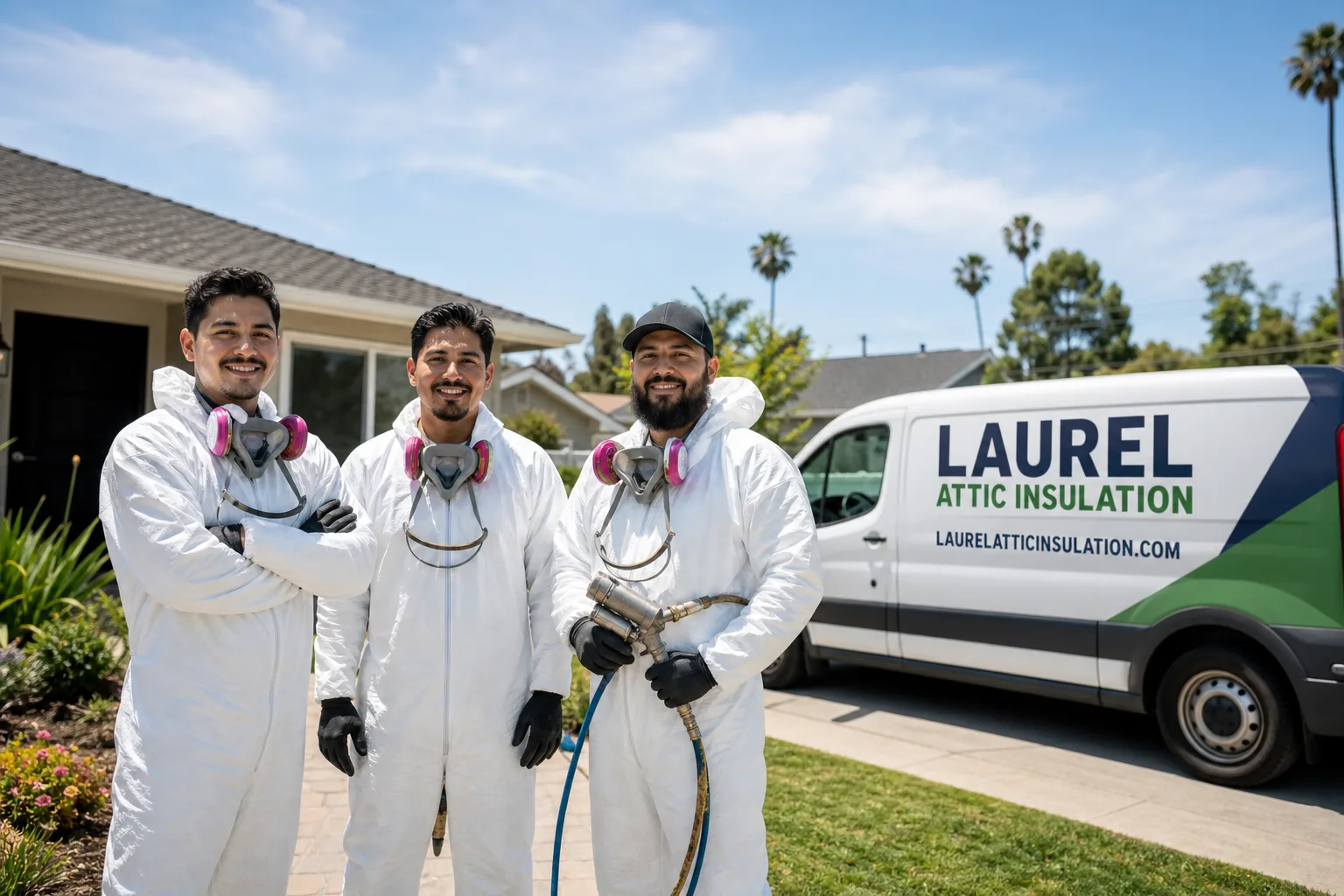
Laurel Attic Insulation was founded in 2003 as part of the Relay Home Co. family of independent local home-service businesses. That means we’re not a national franchise running crews from three counties away. Rodeo jobs are staffed by uniformed, background-checked technicians who know the difference between a 1960s ranch on Rodeo Avenue and a split-level off Willow Avenue. The Relay Visibility Guarantee applies to every single job, Rodeo included: a real arrival time you can track, before-and-after photos delivered to your phone, and a written price before a single staple goes in.
The feedback from Rodeo homeowners is the same pattern we hear across the area: they’ve dealt with no-shows, price changes at the door, and contractors who won’t answer the phone after the check clears. We answer calls 24/7. We show up when we say we will. And every attic job here carries our 365-Day Done Right Promise: if it’s not done correctly, we come back and make it right, no charge. That’s not a marketing line. It’s written into every invoice.
Chase Whitaker leads our Bay Area operations and personally reviews escalation calls from Rodeo. That’s the level of attention a town this size deserves.
Attic Mold Removal in Rodeo
Attic mold removal in Rodeo is usually a moisture problem disguised as a mold problem. Warm air leaks into the attic from unsealed ceiling gaps, hits the cool underside of the roof deck in winter, and condenses. Mold follows. We see this frequently in homes along the Rodeo Creek corridor where morning fog rolls in and temperatures swing hard between day and night. The job involves removing the contaminated insulation, treating the affected framing and sheathing, sealing the air leaks, and then reinstalling clean insulation. Most attic mold removal jobs in Rodeo run $1,800 to $3,500 depending on the size of the affected area and whether the roof deck needs full treatment.
When Mold Means Removal
You can’t just spray over mold and call it done. If the insulation itself is moldy, it has to come out. Fiberglass holds spores in its fibers. Cellulose absorbs moisture and becomes a food source. In Rodeo’s summer, the attic bakes all day, the spores dry out, and your AC system circulates them through the house. If you see dark staining on the underside of the roof deck or smell a musty odor when you pull down the attic ladder, treat it as an active problem until proven otherwise.
After the Removal
Once the contaminated material is out, we seal the bypass gaps that caused the moisture in the first place. Then we check the ventilation. Rodeo attics need adequate intake air at the soffits and exhaust at or near the ridge. Without that air movement, you’ll be calling us again in two years for the same mold. The 365-Day Done Right Promise covers this work, and our free second visit applies if anything comes back.
Attic Insulation Removal in Rodeo
Attic insulation removal in Rodeo is usually a heat damage story. Standard blown-in fiberglass doesn’t fail in dramatic fashion; it settles, compresses, and loses its ability to resist heat transfer. In Rodeo’s microclimate, with the inland-valley heat sitting over the town for five straight months, R-38 insulation installed in 2005 might be performing like R-15 today. Complete removal in Rodeo typically runs $1,300 to $2,800 for an average 1,200-square-foot attic. Add the new insulation cost, and most full removal-and-replacement jobs land between $3,200 and $5,000.
Signs It Needs to Come Out
Settled insulation looks flat and matted. You might notice rooms that were comfortable ten years ago now run hot by 4 p.m. If you see rodent activity, water staining, or old insulation that’s turned gray and crusty, removal beats topping off. Why? Because a top-up over degraded material traps old problems under new material. You don’t paint over rust. Same principle.
Why We Remove Before We Replace
We got a call from a homeowner on Pacific Avenue in Rodeo whose attic had blown-in fiberglass that had settled to about R-8, and the bedroom below was hitting 88°F by mid-afternoon. Our crew removed the degraded fiberglass, sealed a dozen can-light gaps with fire-rated foam, and installed Owens Corning R-38 blown-in with new baffles at the soffits. The homeowner said the room dropped nearly 15 degrees the next day, and we were able to schedule the whole job same-week because we stock Owens Corning locally.
Trusted Brands We Service in Rodeo
We install and warranty insulation from brands that hold up in Rodeo’s specific conditions. Johns Manville Blown-In Fiberglass handles our high-heat attic jobs because it resists settling. Rockwool batts go into the wall cavities and attic floors of Rodeo homes where fire resistance and sound reduction matter. CertainTeed fiberglass is our go-to for top-up jobs where the existing insulation is in good shape but simply under-spec’d. Because we stock material for Rodeo jobs in advance, we don’t have to order-and-wait like other outfits. We tell you the brand and the R-value before the job starts, in writing, with the price.
Common Attic Insulation Problems We See in Rodeo Homes
- Heat-driven fiberglass breakdown. Rodeo’s inland-valley heat pushes attic temperatures past 140°F during summer, which bakes the binders out of standard blown-in fiberglass. Within eight to ten years, that fresh R-38 behaves more like R-15, and your AC runs harder to compensate.
- Blocked soffit vents from previous DIY jobs. Blown-in insulation dumped too close to the eaves starves the attic of intake air. The roof deck bakes, shingles age early, and rooms directly below never cool down.
- Upside-down kraft-faced batts. We regularly find batts installed with the paper facing exposed in Rodeo’s hot attics. That facing traps moisture against the drywall and deteriorates over time, becoming a mold breeding ground.
- Knob-and-tube wiring under newer insulation. Mid-century Rodeo homes sometimes still have active knob-and-tube wiring in attic joist bays. Burying that under new insulation creates a real fire risk. We always probe before we install.
Pricing for Attic Insulation in Rodeo, CA
Most attic insulation jobs in Rodeo run $900 to $2,400 for an average home, depending on square footage and the R-value you need. A basic top-up of blown-in fiberglass to bring an attic from R-19 to R-38 usually costs $900 to $1,500. Full removal and replacement with new baffles and air sealing lands between $3,200 and $5,000. Attic mold removal runs $1,800 to $3,500. Attic batt insulation installation runs $1,400 to $2,700 for a typical 1,200-square-foot attic. You’ll get a written price before any work starts, and that price doesn’t move. Call (361) 315-4177 for a free estimate. The call takes five minutes, and the estimate is delivered over the phone with the Relay Visibility Guarantee attached.
We Also Serve Cities Near Rodeo
Along with Rodeo, our crews handle Attic Insulation work in Hercules, Pinole, El Sobrante, and Benicia. If you’re just outside the Rodeo line and wondering whether we cover you, call (361) 315-4177. We’ll tell you straight. Browse our Attic Insulation in Rodeo page for more on local service specifics.
Serving Rodeo, CA - Our Local Coverage Area
We’re based in the Rodeo area and know this community well. Use the map below to see our service coverage - if you’re nearby, we can almost certainly help.
FAQs About Attic Insulation in Rodeo
If you can see the tops of the ceiling joists, your insulation has settled below code and likely needs attention. But if there’s any moisture staining, rodent activity, or visible mold, removal beats topping off. A top-up over degraded material buries the problem. If the existing insulation is dry, clean, and simply thin, a top-up is the cheaper and faster fix. Call (361) 315-4177 and we’ll help you decide honestly, even if the answer is “wait.”
Sometimes. In unincorporated Contra Costa County, small insulation replacement jobs may not require a permit, but when we remove the old insulation and re-insulate over a certain scope, the County often wants a permit pulled. We handle that process for you. It’s one reason to call a pro instead of a handyman for a full replacement in Rodeo. We know which jobs trigger the permit requirement and which don’t.
Blocked soffit vents combined with settled fiberglass. Homes built before 1980 in Rodeo were typically insulated with a thin layer of fiberglass batts, and the soffits were often covered during a re-roof or a paint job. Heat builds up to 150°F under the roof deck, the insulation cooks, and the AC struggles. We fix it by clearing the vents, installing baffles, and bringing the attic up to R-38 or better.
Yes. In most cases, we can have a crew in Rodeo the same day for a mold or moisture emergency, especially if you call by mid-morning. We coordinate dispatch from our Bay Area office, and we keep Rodeo jobs staffed locally. Same-week installation is standard; same-day assessment is often possible. Call (361) 315-4177 and describe what you see. We’ll tell you over the phone whether it can wait a day or needs immediate attention.
We primarily install Owens Corning, Johns Manville, CertainTeed, and Rockwool in Rodeo homes. The brand matters less than the material type and R-value, but these manufacturers produce fiberglass and mineral wool that resist the heat-driven settling that degrades lesser products in Rodeo’s summer attic conditions. We never use whatever’s left on the truck. We match the material to your attic’s ventilation, air-sealing needs, and target R-value, and we tell you what we’re installing before we start, in writing.
Written by Chase Whitaker, Owner at Laurel Attic Insulation, serving Rodeo through our Bay Area operations.