
Fast, Reliable Attic Insulation Across Palm Springs
Attic insulation in Palm Springs isn’t a one-size-fits-all job. The desert heat here pushes attic temperatures past 160°F in summer, and that changes what materials actually work. Most Palm Springs homes need insulation that resists radiant heat gain, not just the standard fiberglass you’d install in a coastal city. Laurel Attic Insulation runs crews into Palm Springs from our Inland Empire office, with same-day availability for most repair calls and a written price before any work starts. Call (361) 315-4177 for a free estimate and we’ll tell you exactly what your attic needs and what it costs.
Why Laurel Attic Insulation Is Palm Springs’s Preferred Attic Insulation Company
Palm Springs homeowners keep calling us because we treat the desert climate as its own animal. The temperature swings here bake standard insulation in ways you don’t see in Riverside or Los Angeles. We carry materials matched to that reality: mineral wool and radiant-barrier-backed systems that hold R-value when attic temps spike, plus high-flow ventilation that actually purges superheated air instead of trapping it.
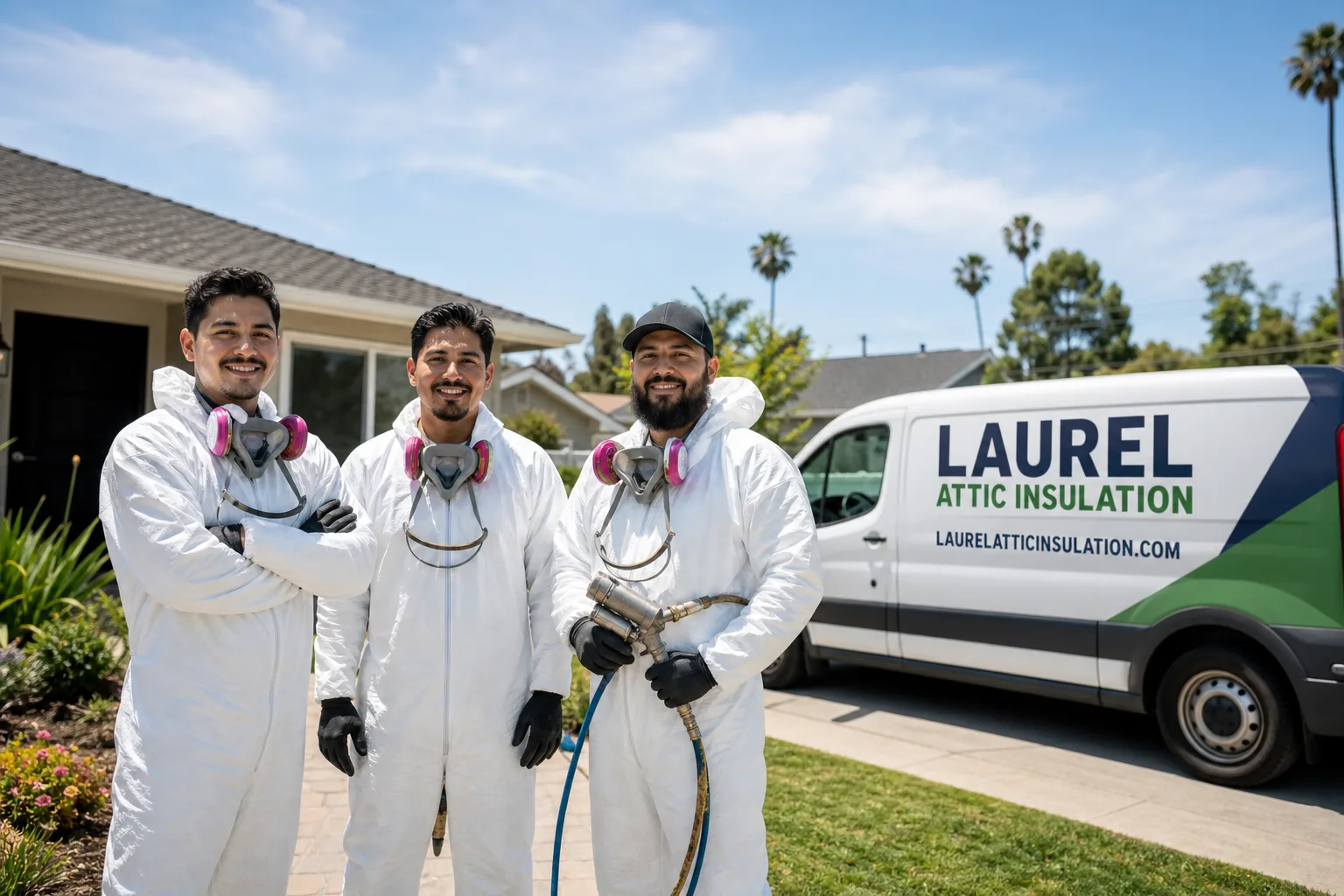
Our Attic Insulation team shows up in uniform, background-checked, at a live trackable time. You get a written price before work starts, photo proof during and after the job, and a 365-day guarantee in writing. If something isn’t right, we fix it at no charge. That’s the Relay Visibility Guarantee, named after the Relay Home Co. family Laurel has been part of since 2003. Chase Whitaker leads the insulation crews, and he’s the one who set the standard for how we document every job: before photos, after photos, and a digital invoice you can pay from a link.
In Palm Springs specifically, that visibility matters. You’re not home when the attic hits 150°F. You want proof the work happened and the numbers on the invoice match the work in the photos. We deliver that on every single job.
Insulation Contractors in Palm Springs
Insulation Contractors in Palm Springs do more than blow fiberglass into an attic. The job here means assessing what’s currently up there, checking ventilation, air-sealing gaps that leak conditioned air, and then installing material matched to the desert’s thermal cycling. A Palm Springs homeowner needs this when summer electric bills climb despite a running AC, when second-floor rooms never cool below 80°F, or when insulation has visibly crumbled under decades of heat exposure. Most attic insulation jobs here run $900 – $2,400 depending on square footage, existing material condition, and the R-value target.
Blown-In and Batt Systems for Desert Attics
Blown-in fiberglass like Owens Corning PINK Next Gen Fiberglas works well in Palm Springs attics when paired with proper ventilation. We blow it to R-38 or higher, which is the practical target for this climate. Batts work for accessible attics where you want defined coverage, but they underperform if the attic isn’t vented to move superheated air out.
When Replacement Beats Top-Up
A top-up adds new material over old. That’s fine if the old insulation still has integrity and no moisture or pest damage. If the existing batts have compressed to dust, you’re better off with full removal and replacement. We vacuum out degraded material, air-seal the top plates, and install fresh insulation to spec.
Attic Ventilation in Palm Springs
Attic Ventilation in Palm Springs is the difference between a fixed attic that stays fixed and one that fails again in two summers. A vented attic moves hot air out through ridge vents, solar-powered roof vents, or low-profile O’Hagin vents, which keeps the ceiling below cooler and extends the life of whatever insulation you installed. Most Palm Springs homes we inspect have either zero mechanical ventilation or vents that were clipped by a past roofer and never reconnected. Ventilation upgrades alongside insulation typically run $400 – $1,200 depending on the attic footprint and what’s practical for the roof line.
Why the Desert Needs More Than Passive Vents
Passive vents help, but a Palm Springs attic at 2 p.m. in July needs active air movement. That’s why we commonly specify solar-powered roof vents that spin hardest when the sun is most intense. This simple addition can drop attic temperatures by 20 to 30 degrees during peak heat, which translates directly to indoor comfort.
Baffles and Air Sealing Before You Insulate
Baffles keep insulation from blocking soffit intake vents, which matters in older Palm Springs homes where eaves are tight. Air sealing the top plates, can lights, and plumbing penetrations prevents warm interior air from leaking into the attic in winter, which causes condensation on cold nights and wets your insulation. We do this prep work on every replacement job because skipping it makes new insulation fail faster.
Trusted Brands We Service in Palm Springs
We stock materials from Owens Corning, Johns Manville, and Rockwool for Palm Springs jobs, and we match the product to the application rather than whatever is on the truck. Rockwool mineral wool works exceptionally well here because it doesn’t lose R-value as temperatures climb and it resists the thermal cycling that breaks down fiberglass over decades. Owens Corning blown-in fiberglass remains our go-to for full-attic coverage at a sensible price point. Knauf batts come into play for specific repairable sections. For Palm Springs customers, having these materials in local supply means faster turnaround when you call (361) 315-4177.
Common Attic Insulation Problems We See in Palm Springs Homes
- Baked and crumbled fiberglass. Homes built in the 1950s through 1970s across neighborhoods like Vista Las Palmas, Deepwell Estates, and Sunmor often have original fiberglass batts that have been cooking at 150°F for decades. They compress into a papery mat with almost no R-value left. Full removal and replacement is the only real fix.
- Under-ventilated attics. Many mid-century Palm Springs homes have minimal roof venting and no mechanical ventilation. Heat pours through the ceiling drywall into living spaces all afternoon, so the AC cycles constantly and rooms still feel warm. Adding solar-powered vents or O’Hagin low-profile vents changes the math quickly.
- Winter condensation. Those cold desert nights in the 40s combined with warm interior air leaking through unsealed can lights and top plates cause condensation that wets insulation and grows mold. Air sealing before insulation solves this.
- Inconsistent coverage from past work. We regularly see attics where someone blew insulation years ago but left bare spots over bedrooms or garage ceilings. Thermal imaging shows the gaps clearly, and in Palm Springs, a bare spot means a hot ceiling by noon.
Pricing for Attic Insulation in Palm Springs, CA
Here are honest numbers for the Palm Springs market. A basic top-up over existing insulation in a 1,500-square-foot home runs $900 – $1,400. Full removal and replacement with blown-in Owens Corning fiberglass to R-38 typically costs $1,800 – $2,400 depending on attic size and access difficulty. Adding ventilation like a solar-powered roof vent or two low-profile O’Hagin vents runs $400 – $1,200 on top. What changes the price: attic square footage, how much old material needs vacuuming out, whether there’s existing mold or moisture damage, and how accessible the roof line is for vent installation. Estimates are free, the price is in writing before we start, and it won’t change when we arrive. Call (361) 315-4177 to schedule.
We Also Serve Cities Near Palm Springs
Besides Palm Springs, our crews handle attic insulation in Cathedral City, Desert Hot Springs, Rancho Mirage, and Thousand Palms. Same-day response and the same written-price guarantee apply across the whole service area.
Serving Palm Springs, CA - Our Local Coverage Area
We’re based in the Palm Springs area and know this community well. Use the map below to see our service coverage - if you’re nearby, we can almost certainly help.
FAQs About Attic Insulation in Palm Springs
Yes. Palm Springs attics routinely exceed 160°F in summer, and standard fiberglass batts degrade under that repeated thermal cycling faster than in cooler California climates. The dependable fix is either mineral wool, which holds its R-value at high temperatures, or blown-in fiberglass paired with radiant-barrier-backed materials and active ventilation to move superheated air out. We specify materials by attic temperature measurements, not by guesswork. Call (361) 315-4177 and we’ll assess what your attic actually needs.
Baked fiberglass batts that have compressed to dust after 30-plus years of 150°F attic temperatures. We see this constantly in older Palm Springs neighborhoods like Vista Las Palmas, Deepwell Estates, and Sunmor. The insulation looks full from a distance but tests at R-0 to R-6 instead of R-30. Full removal, air sealing, and replacement is the correct repair.
Yes, in most cases. We run crews into Palm Springs from our Inland Empire office, and we hold same-day slots for repair calls. A full replacement may require a next-day start depending on attic size and material availability, but a repair or top-up can typically happen the same day you call. The fastest way to confirm availability is to call (361) 315-4177.
Ventilation removes the superheated air before it can radiate through your ceiling. In a Palm Springs attic with new R-38 insulation but no active venting, temperatures still spike past 150°F and the insulation slowly cooks. Adding a solar-powered roof vent or O’Hagin vents drops that peak temperature significantly, which extends insulation life and makes the rooms below measurably cooler by mid-afternoon.
If the existing insulation is compressed, moisture-stained, or moldy in spots, it needs replacement. If it’s still lofty and dry but thin in coverage, a top-up is enough. We inspect and document with photos, then give you a written recommendation and price for whichever path fits. Estimates are free. Call (361) 315-4177 to book an inspection.
Written by Chase Whitaker, Owner at Laurel Attic Insulation, serving Palm Springs since 2003.