
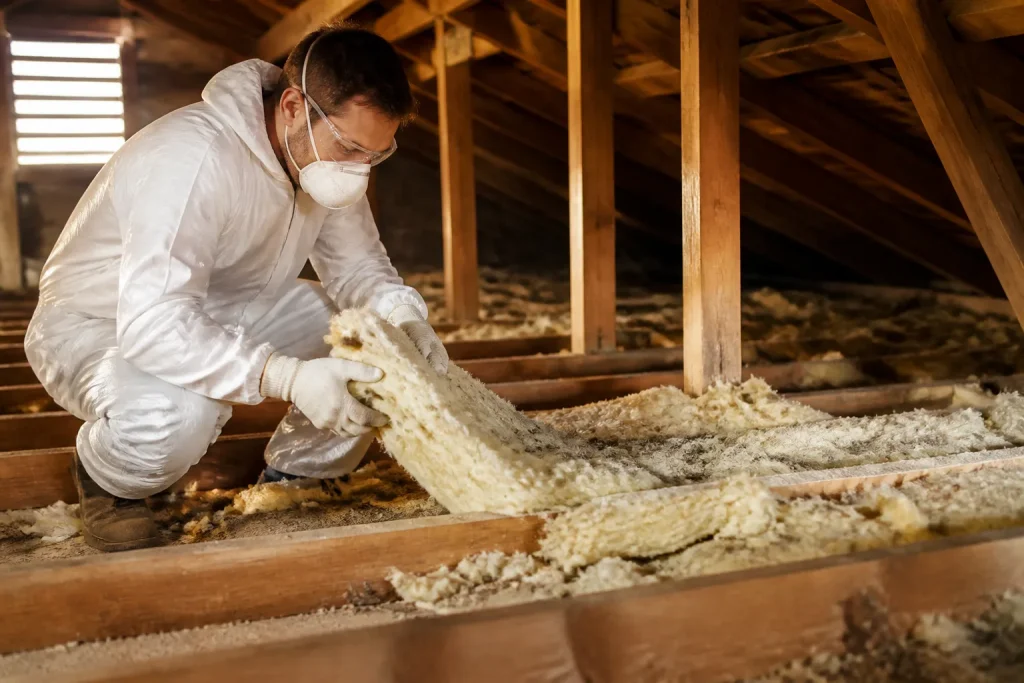
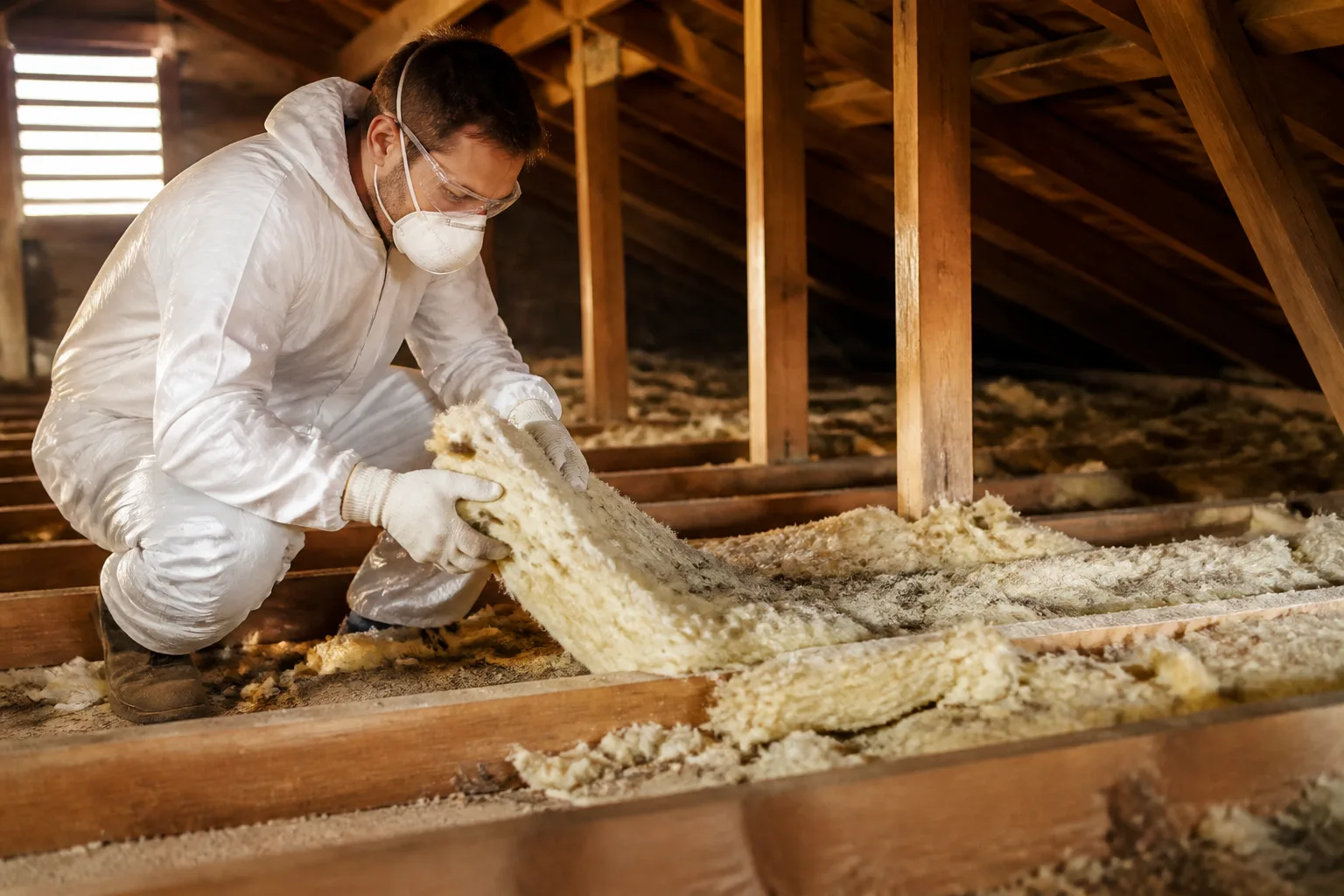
Insulation Removal: Repair or Replace? How Los Angeles Homeowners Decide
Most attic insulation in Los Angeles doesn’t need a full tear-out. It needs a targeted repair or a top-off, and the difference in price between those two paths is usually $1,200 to $3,500. But three conditions make removal non-negotiable: rodent contamination, mold, and pre-1980 vermiculite. If you’d rather not sort through the details yourself, call (361) 314-0118 and we’ll walk you through it over the phone.
Here’s the uncomfortable truth: insulation contractors make far more money on full replacements than on repairs. A full removal and reinstall in Los Angeles runs $3,500 to $8,000 depending on attic size and accessibility. A targeted repair or top-off typically costs $900 to $2,400. We’ve been doing this in LA, and we’ve watched too many homeowners pay for a full tear-out when the actual problem was a 40-square-foot section of compressed batts above one bedroom.
The Three Conditions That Make Full Removal Non-Negotiable
Here’s the direct answer: if your attic insulation has been contaminated by rodents, colonized by mold, or contains vermiculite from before 1980, repair is not an option. Full removal is the only safe path forward.
Rodent contamination. Rats, mice, and squirrels leave urine and feces throughout insulation. You can’t see half of it from the attic hatch, and you can’t sanitize fiberglass or cellulose that’s been saturated. The smell returns, and so do the pathogens. In neighborhoods like Silver Lake and Echo Park, where older homes have gaps around roof penetrations, we see this constantly. The fix is pull everything out, seal the entry points, and reinstall fresh material.
Mold presence. Los Angeles gets blamed for being dry, but attic mold is common here because of temperature swings and bathroom fans venting into the attic instead of outside. If mold has penetrated insulation, replacing just the visible section doesn’t solve the problem. Spores spread. Full removal is the only way to break the cycle.
Pre-1980 vermiculite. This is the one that matters most. Vermiculite insulation installed before 1980 came largely from a mine in Libby, Montana, and it’s known to contain asbestos. You cannot tell by looking at it. If your attic has loose, pebbly insulation that looks like tiny accordions, do not disturb it. Get it tested. If it tests positive, only a professional removal crew should touch it.
When a Repair or Top-Off Is Genuinely Enough
If none of those three conditions apply, the repair-versus-replace math shifts hard in favor of repair. Here’s what we tell Los Angeles homeowners to check first.
R-value. That’s the number that measures how well insulation slows heat from moving through your ceiling. LA’s climate zone 3 calls for R-30 to R-38 in attics. If your existing blown-in fiberglass measures R-19 or R-25 and it’s dry, clean, and evenly distributed, topping it off with another 6 to 10 inches is usually the right call. You get the performance lift without paying for removal labor.
Compression and settling. Fiberglass batts that have been walked on, water-damaged in one corner, or shoved aside during rewiring work lose their loft. Dead air space is what makes insulation work. If the damage is isolated, a repair makes sense. We pulled a job in Mar Vista last month where a homeowner had spent three years with a hot bedroom because one 15-foot strip of batts had been pulled up during a recessed lighting install and never put back. That was a $400 repair, not a $5,000 replacement.
Pest-free but old. Insulation that’s 30 years old but dry, clean, and intact still insulates. Fiberglass doesn’t “expire.” If you’re not happy with your energy bills and your insulation is in good physical shape, the first move is air sealing, not removal. The second move is a top-off. Full replacement should be the last option considered, not the first one pitched.
How to Assess Your Current R-Value Without Removing Anything
You don’t need to rip out insulation to know what you’re working with. In Los Angeles, a professional infrared scan costs between $250 and $500 and gives you a thermal map of your entire ceiling. It shows exactly where insulation is thin, missing, compacted, or performing poorly. You can see temperature differentials room by room.
Here’s the process we use when a homeowner calls asking whether they need repair or replacement:
- Infrared scan or visual inspection. The scan shows performance gaps. A visual check confirms the material type and condition.
- Depth measurement. We measure insulation depth in multiple spots and convert it to R-value based on material type. For blown-in fiberglass, you’re looking at roughly R-2.5 to R-3 per inch.
- Moisture check. A moisture meter tells us whether hidden dampness is compromising the material.
- Contamination check. Rodent droppings, nesting material, or mold signs trigger the removal conversation immediately.
If you want a clear picture before you spend anything, Insulation Removal in Los Angeles is a page we maintain with specifics on how this process works in LA attics specifically.
The Repair Math: Top-Off vs. Full Tear-Out in Los Angeles
Let’s put actual numbers on this. These are real ranges for the Los Angeles market in 2026, based on what we quote in homes across the Westside, the Valley, and the Eastside.
- Blown-in fiberglass top-off (add R-19 to reach R-38): $1,200 to $2,200 for a typical 1,500 sq ft attic.
- Blown-in cellulose top-off: $1,100 to $1,900 for the same footprint.
- Full removal and reinstall with blown-in fiberglass: $3,700 to $6,500.
- Full removal and reinstall with open-cell spray foam (rodent-sealed, higher air-seal performance): $6,500 to $12,000 depending on roofline complexity.
- Targeted batt repair in one section: $350 to $800.
The decision point is simple: if your existing insulation is clean and dry, a top-off gets you to the same R-value for about a third of the price of a full replacement. If you have contamination, that top-off is worthless. You’d be burying the problem under fresh material and paying twice later.
The LA-Specific Factor Nobody Talks About: Fire Season Ash
Here’s a Los Angeles issue that generic insulation guides miss entirely. Santa Ana wind events push ash and fine particulate into attic spaces through roof vents, gable openings, and any gap in the eaves. Over multiple fire seasons, that ash settles into your insulation. It’s abrasive. It clogs the air pockets that make insulation work. And in homes near the 405 and the 101, you’ve got the same problem from brake dust and freeway particulate.
We see it most in homes along the Valley edge, from Studio City up through Sherman Oaks and Encino, where wind-driven ash from the Sepulveda Pass corridors lands in attics. If you’ve lived in your home through three or more significant fire seasons and your attic has never been inspected, the insulation is likely carrying a load of fine particulate that quietly degrades its performance.
This is one case where replacement beats repair, because you can’t top off insulation that’s full of ash and expect the new material to stay clean. The fix is removal, followed by air sealing around the attic penetrations, then fresh insulation installed to spec.
What a Written Scope of Work Should Include (For Either Path)
Whether you’re repairing or replacing, the document that protects you is the written scope of work. In Los Angeles, too many insulation jobs get quoted over the phone without a written breakdown. That’s how price changes happen at the door.
Here’s what any legitimate insulation scope should spell out, in writing, before any work begins:
- Exact material and brand. Not “fiberglass” but “Owens Corning Atticat blown-in fiberglass, R-38 target depth.” We use materials from Owens Corning, Rockwool, and Johns Manville depending on the job, and the brand goes in writing every time.
- Square footage of coverage. Measured, not estimated.
- Prep work included. Air sealing, vent baffle installation, and debris cleanup should be line items, not assumptions.
- Removal and disposal fees. If it’s a replacement job, disposal should be a separate line item with a firm price.
- The guarantee in writing. This is the one line item that protects you if the new insulation underperforms. Our Done Right Promise states that if it’s not done right, we make it right. No qualifying language, no “normal wear and tear” exclusion for workmanship. If a repair fails within 365 days, the second visit is free.
If a contractor won’t put the guarantee in writing, that’s your answer on whether to hire them.
When to Call a Pro
If your attic has any of the three removal triggers we covered – rodents, mold, or vermiculite – stop. Don’t disturb anything. Asbestos fibers from vermiculite and airborne spores from mold are both serious health risks. A trained professional needs to assess the space before anyone touches the material.
If you’re just topping off clean insulation, the DIY route exists, but most LA homeowners don’t have the equipment to blow material evenly across a 1,500-square-foot attic, and rental blowers from big-box stores are temperamental. We’ve fixed more than a few uneven DIY top-offs where someone ended up with R-38 in one corner and R-19 in another.
For related services in Los Angeles, you can read more about Attic Insulation in Los Angeles or Spray Foam Insulation in Los Angeles depending on which direction your project takes.
The Bottom Line
Repair or replace comes down to three measurable conditions: contamination, mold, and pre-1980 vermiculite. If those aren’t present, a top-off or targeted repair usually delivers the performance you need for a fraction of the price. If they are present, no amount of fresh insulation will fix the underlying problem.
Before you decide, get an inspection that includes an infrared scan and a moisture check. Get the scope in writing, with the material brand and the guarantee spelled out line by line. If you’re in Los Angeles and need help, Laurel Attic Insulation offers free estimates – call (361) 314-0118 and we’ll give you a straight answer on repair versus replacement, even if you don’t hire us.
Frequently Asked Questions
Full insulation removal in Los Angeles typically runs $1,500 to $3,000 as a standalone service, depending on attic size, access difficulty, and contamination level. If new insulation installation is included, the combined project usually lands between $3,700 and $8,000. Call (361) 314-0118 for an exact quote – estimates are free and the price is in writing before any work starts.
Repair is almost always cheaper. A targeted repair or top-off costs $350 to $2,200 in Los Angeles, while full replacement runs $3,700 to $8,000. The exception is contamination: repairing insulation that has rodent waste or mold in it just buries the problem and costs you more later. Call (361) 314-0118 and we’ll tell you which path applies to your attic.
If you see rodent droppings, smell mustiness from mold, or have loose pebbly insulation from before 1980, your insulation needs replacing. If it’s dry, clean, and just old or thin, it likely only needs a top-off. An infrared scan in Los Angeles costs $250 to $500 and gives you a definitive answer without removing anything.
Most Los Angeles attic insulation removals and replacements are completed in one day. Larger attics over 2,000 square feet or severe contamination jobs can take two days. We offer live technician tracking so you know exactly when the local pro arrives, and you get before-and-after photos of the attic when the job is done.
Written by the team at Laurel Attic Insulation.
Need Insulation Help?
Call Laurel Attic Insulation - licensed & insured, here with fast after-hours help in Los Angeles.
(361) 314-0118